

Concrete permitting in North Augusta, Aiken, and Edgefield County depends on project location, public right-of-way transitions, and structural load bearing. While private backyard patios rarely need permits, driveway aprons connecting to state highways require mandatory SCDOT encroachment permits, commercial slabs require municipal zoning approval, and retaining walls over 4 feet mandate PE stamped structural drawings.
Jurisdiction Guide: North Augusta, Aiken & Edgefield County Rules
Navigating concrete construction permits across the Central Savannah River Area can be challenging because building codes vary significantly between municipalities and counties. A concrete project in the City of North Augusta follows different regulatory codes than a project in the City of Aiken, unincorporated Aiken County, or Edgefield County.
South Carolina law establishes strict thresholds for building permits, environmental stormwater compliance, and licensing. Under South Carolina Department of Labor, Licensing and Regulation (SC LLR) mandates, residential builders and commercial general contractors must pull required permits and adhere to the 2021 South Carolina Building Code (IBC/IRC).
Investing in certified contracting—from our licensed Concrete Contractor South Carolina team—ensures your project complies with municipal zoning setbacks, structural inspections, and right-of-way laws.
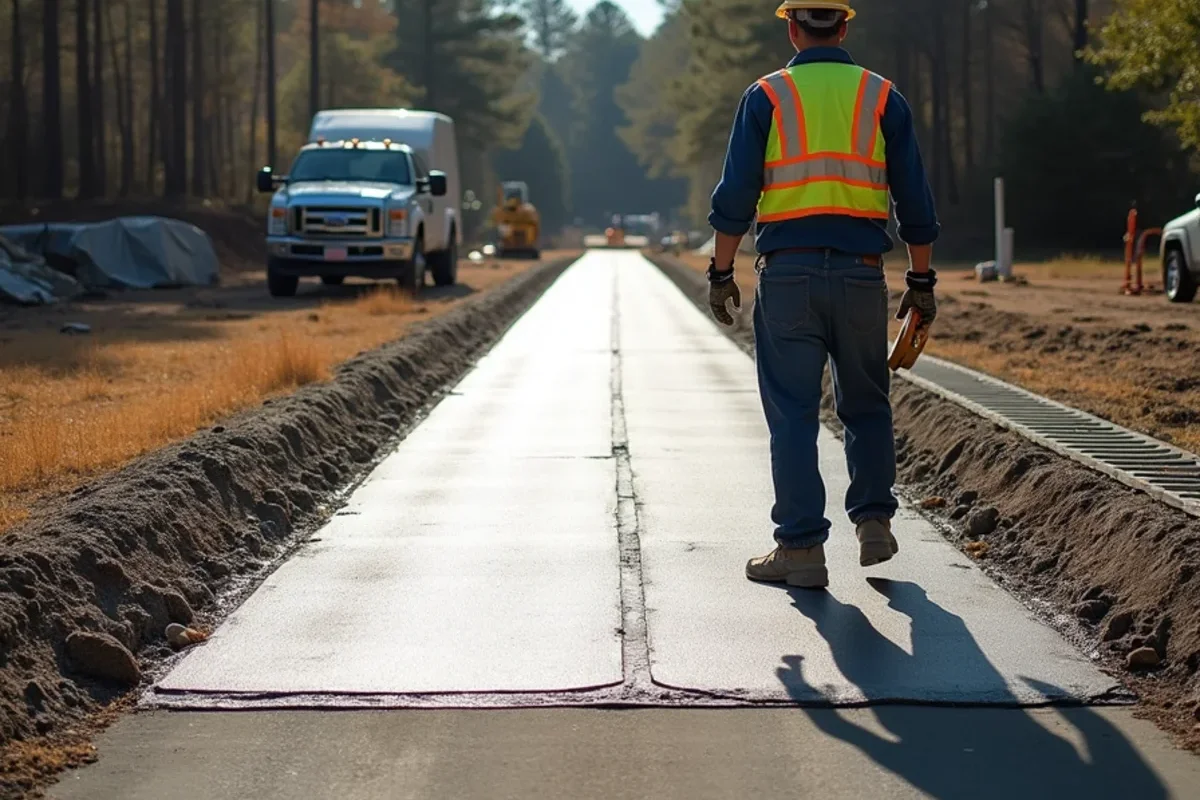
SCDOT Encroachment Permits: Driveway Connections to State Roads
The most critical—and frequently overlooked—permit in South Carolina is the SCDOT Encroachment Permit (Form 632). The South Carolina Department of Transportation maintains thousands of miles of primary and secondary roads throughout Aiken and Edgefield counties:
- What Triggers the Permit: If your property driveway transitions onto a state route—such as Whiskey Road (SC-19), Jefferson Davis Highway (US-1), Knox Avenue (US-25), Augusta Road (SC-421), or Edgefield Road—you cannot touch the state right-of-way without an approved permit.
- SCDOT Concrete Specifications: The state requires driveway aprons within the right-of-way to be poured at a minimum 6-inch thickness using 4,000 PSI ready-mix concrete. Standard 4-inch residential slabs are strictly prohibited in the apron zone.
- Roadside Ditch Culverts: If roadside stormwater flows through a swale in front of your property, SCDOT specifies the exact culvert pipe diameter (typically 15-inch reinforced concrete or dual-wall HDPE pipe) and mandates protective concrete headwalls or stone rip-rap armoring.
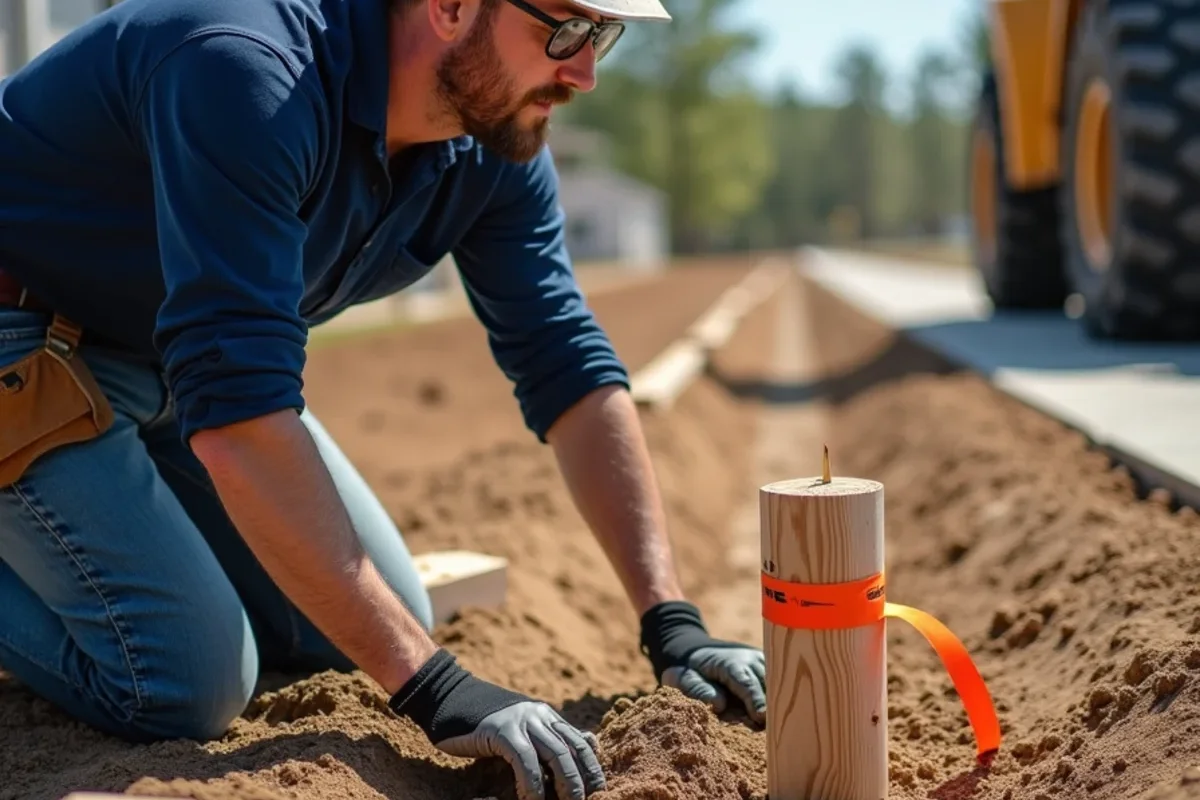
Retaining Walls and Monolithic Slabs: Engineering Thresholds
While flatwork like garden walks rarely triggers building department scrutiny, structural concrete installations have clear legal thresholds:
The 4-Foot Retaining Wall Threshold Under IRC Section R105.2, any concrete retaining wall retaining more than 4 feet of unbalanced soil—measured from the bottom of the footing to the top of the wall—legally requires a building permit accompanied by structural calculations and drawings stamped by a South Carolina licensed Professional Engineer (PE).
Monolithic Detached Shop Slabs Pouring a concrete slab for an enclosed garage, steel workshop, or accessory dwelling unit (ADU) requires building plan review. The building department inspects: - Footing Depth: Perimeter turn-down footings must extend below regional frost depth (minimum 12 inches below finished grade). - Vapor Retarders: A 10-mil to 15-mil continuous polyethylene vapor barrier is mandatory beneath enclosed occupancies. - Zoning Setbacks: Slabs must meet minimum property line setbacks (typically 5 to 10 feet from side and rear boundaries).

HOA Architectural Review Committees: Subdivision Approvals
In master-planned communities across North Augusta and Aiken—such as Woodside Plantation, The River Club, Hammond's Ferry, and Mount Vintage—homeowner associations enforce strict architectural covenants:
- Impervious Surface Limits: Many HOAs cap total backyard concrete coverage to protect community stormwater retention ponds.
- Decorative Finishing Guidelines: Subdivisions often mandate decorative finishes (such as stamped brick borders, slate textures, or earthy integral colors) rather than plain grey broom finishes.
- Required Submission Package: Before starting formwork, homeowners must submit scale plot plans showing dimensions, drainage slopes, and contractor license credentials. FPC Construction provides comprehensive CAD sketches and scope packets for rapid HOA ARC approval.
Permit Requirements Decision Matrix by Project Type
| Project Category | City of North Augusta | Unincorporated Aiken County | Edgefield County | SCDOT Right-of-Way |
|---|---|---|---|---|
| Backyard Patio (Existing Grade) | No permit required | No permit required | No permit required | N/A |
| Driveway Replacement (In-Kind) | No permit required | No permit required | No permit required | Permit needed if touching apron |
| New Driveway Apron / Curb Cut | City Encroachment Permit | County Public Works Review | County Road Review | SCDOT Form 632 Mandatory |
| Detached Shop / Garage Slab | Building Permit + Setback Review | Building Permit Required | Building Permit Required | N/A |
| Retaining Wall Over 4 Feet | PE Stamped Drawings + Permit | PE Stamped Drawings + Permit | PE Stamped Drawings + Permit | PE Stamped + Encroachment if near road |
| Commercial Dumpster Pad / ADA Walk | Commercial Plan Review + ADA | Commercial Building Permit | Commercial Building Permit | SCDOT Commercial Encroachment |
The Risks of Unpermitted Work: Fines, Tear-Outs & Title Clouds
Why should property owners insist on proper permitting? Choosing an unlicensed contractor who skips permits creates severe financial consequences:
- Municipal Stop-Work Orders & Red Tags: Building inspectors routinely halt unpermitted pours, assessing double permit fees and daily municipal fines.
- Forced Concrete Demolition: If an unpermitted driveway apron blocks roadside ditch drainage or violates SCDOT sight-lines, the state can legally order the homeowner to tear out the concrete at their own expense.
- Closing Delays and Title Clouds: When selling your home, buyer title attorneys and home inspectors check municipal permit registries. Unpermitted accessory building pads or driveway additions can delay real estate closings and require expensive retroactive engineering certifications.
At FPC Construction, we pull all required municipal and state permits, schedule mandatory footing inspections, and provide signed certificates of completion for your permanent property records.
Next Steps: Build 100% Code-Compliant Concrete
Do not risk your property investment with unpermitted concrete work. Contact FPC Construction at (833) 334-0468 for a free on-site consultation, zoning setback review, and complete permit management.
Certificate of Occupancy and Final Inspection Sign-Off
Once concrete formwork, steel rebar reinforcement, and ready-mix placement are complete, FPC Construction schedules mandatory municipal building inspections. City and county building inspectors verify driveway approach slopes, right-of-way sight lines, and setback compliance before issuing final approval. We provide signed certificates of completion, manufacturer concrete batch tickets, and written 5-year workmanship warranties for your permanent property records.
Navigating SCDOT Encroachment Permits for Driveway Aprons on State Secondary Roads
Homeowners and commercial property owners in North Augusta and rural Aiken County frequently encounter dual-jurisdiction requirements when expanding or pouring new driveway aprons. If your property fronts a state-maintained route (such as Highway 25, Martintown Road, or secondary state highways designated with SC route markers), the local municipal permit is insufficient on its own. Property owners must obtain an official SCDOT Encroachment Permit (Form 210) prior to any sawcutting, excavation, or concrete placement within the state right-of-way. SCDOT standards mandate specific driveway throat widths, minimum radii for commercial entrances, and concrete compressive strength ratings of at least 3,000 PSI with 6-inch minimum thickness across the apron. Failing to obtain SCDOT approval before pouring can result in stop-work orders, administrative fines, and costly mandatory tear-outs of newly poured concrete.
Stormwater Runoff Impervious Surface Ratios in Aiken County Municipalities
Local municipal stormwater management divisions enforce strict impervious surface limits to protect municipal drainage systems and the Savannah River basin. When planning expansive concrete installations—such as circular driveways, multi-vehicle parking pads, or extended backyard entertainment patios—property owners must verify that total lot coverage remains compliant with local zoning ratios. In North Augusta residential zones, exceeding maximum impervious surface thresholds often triggers the requirement for an engineered stormwater mitigation plan, including dry wells, gravel infiltration trenches, or bioswales to handle runoff velocity. Consulting with an experienced concrete contractor who coordinates directly with Aiken County Engineering ensures your flatwork design remains fully compliant while preventing runoff disputes with adjacent property owners.
Speak Directly with a South Carolina Concrete Specialist
Guaranteed 1-hour callback · On-site evaluation in 48 hours · Free written estimate
Article Frequently Asked Questions
Key takeaways and common homeowner inquiries answered by our concrete team.