SC Licensed & Insured
North Augusta, SC & Aiken County(803) 640-2595
Sunken Concrete Leveling
SC Licensed · 4,000+ PSI Engineered Pours

Sunken Concrete Leveling & Slab Repair in North Augusta, SC

Precision slab lifting, void stabilization, and sunken concrete restoration. Realigning dropped walkways, sinking patio sections, and settling garage slabs without destructive replacement.

Fast Dispatch

Request a Free On-Site Estimate

Callback within 1 business hour · On-site inspection within 48 hours

100% Free & No ObligationWritten Scope in 24h

Sunken Concrete Leveling & Slab Lifting in North Augusta, SC

When a front porch step separates from your brick facade, a patio slab pitches backward toward siding, or a walkway panel drops by two inches, the problem is not defective concrete—it is lost subgrade support beneath the slab. In North Augusta, Belvedere, and Aiken, intense rainfall events quickly erode loose Sandhills sand, while seasonal dry spells cause expansive Piedmont clays to desiccate and shrink. The resulting underground voids leave heavy concrete slabs suspended with zero support, inevitably causing them to sink, tilt, and become dangerous tripping hazards.

At FPC Construction, we restore sunken concrete slabs to precision laser alignment using state-of-the-art geotechnical polyurethane foam injection. Operating from our North Augusta hub, our licensed crews lift dropped sidewalks, tilted pool decks, sunken garage floor entries, and sloping patios without destructive jackhammer demolition. Our high-density polymer expands beneath the slab, compacting loose soils, sealing subsurface voids, and permanently restoring positive drainage away from your home.

What Our Sunken Slab Leveling Scope Includes

Our non-invasive slab lifting process restores structural integrity with surgical accuracy in just a few hours:

•Precision Laser Elevation Survey: Shooting laser levels across all panels to map exact drop differentials and calculate lifting trajectories.
•Subsurface Void Detection: Sounding the slab and measuring void depths to identify hidden washouts beneath edges and expansion joints.
•Penny-Sized 5/8-Inch Port Drilling: Drilling discrete micro-injection ports through the slab, avoiding structural reinforcement damage.
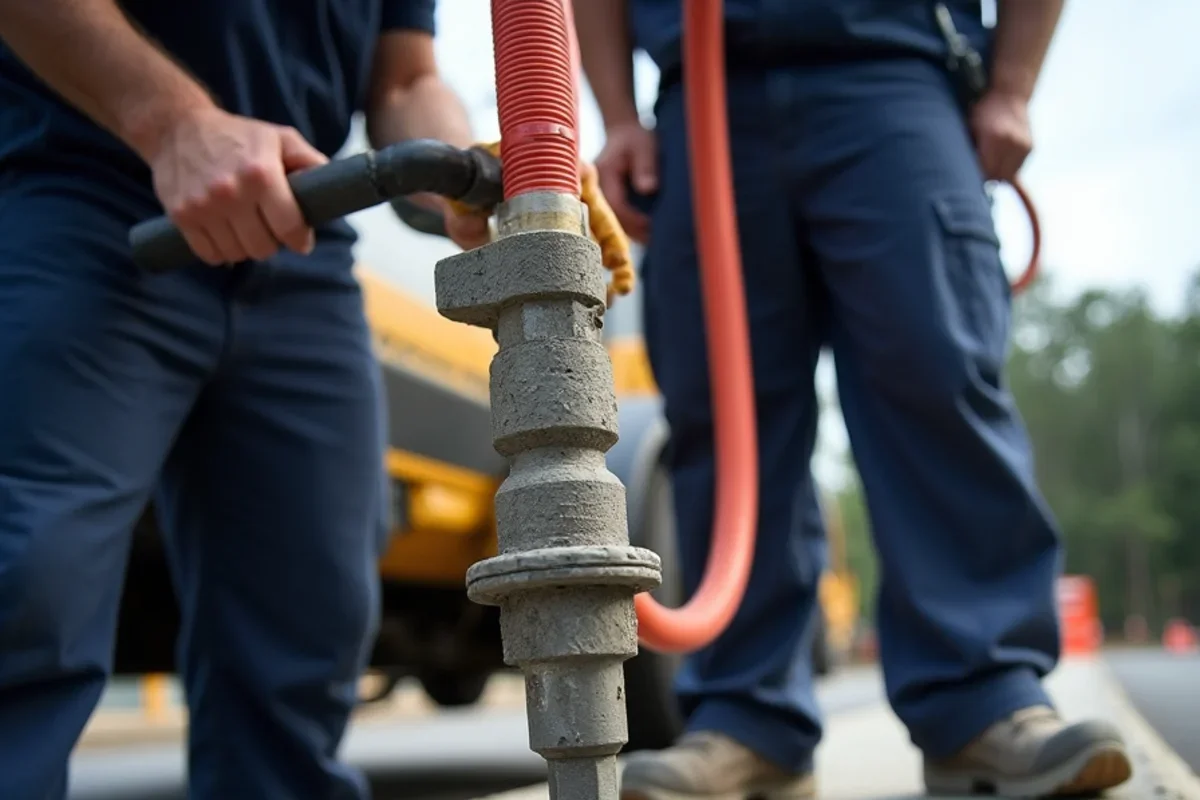
•Geotechnical Polyurethane Injection: Pumping dual-component, closed-cell expanding polymer beneath the slab at controlled hydraulic pressures.
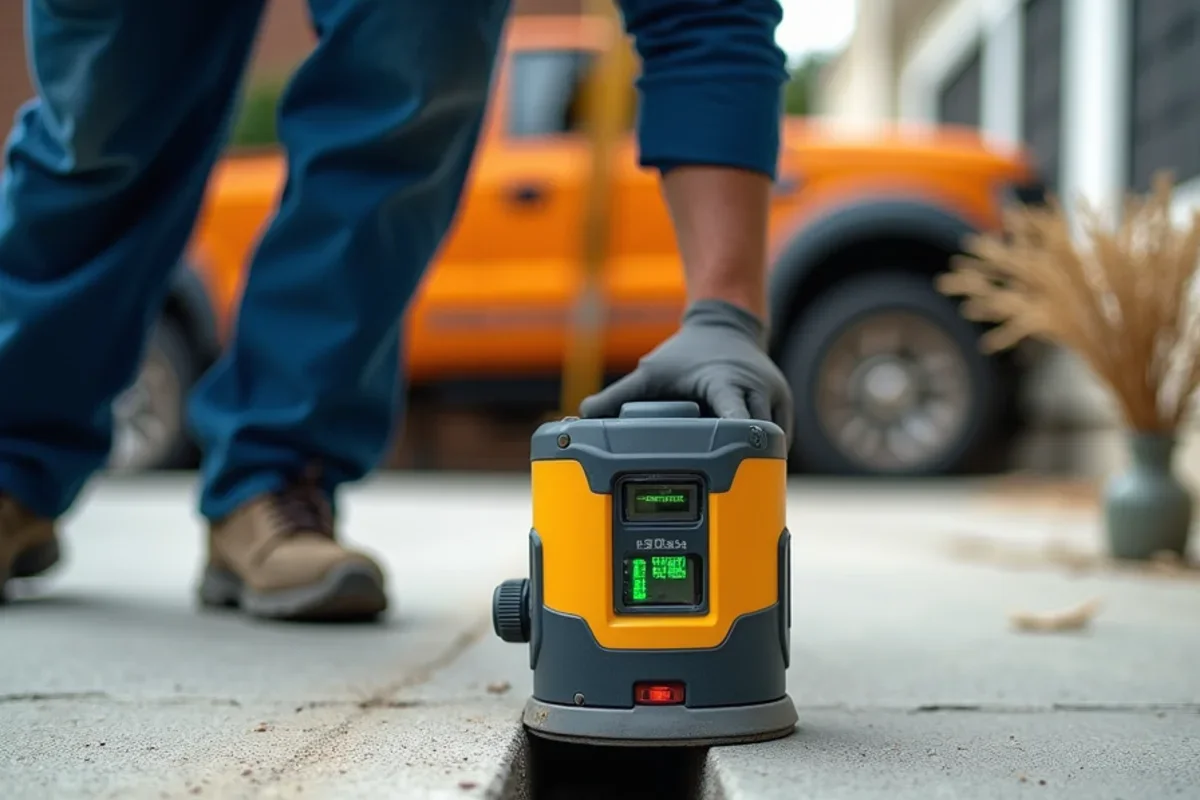
•Controlled Laser-Monitored Lift: Monitoring slab rise with optical levels to guarantee seamless alignment with adjoining surfaces.
•Hydrophobic Void Consolidation: Expanding foam displaces standing groundwater and locks surrounding subgrade soils into a solid, unyielding matrix.
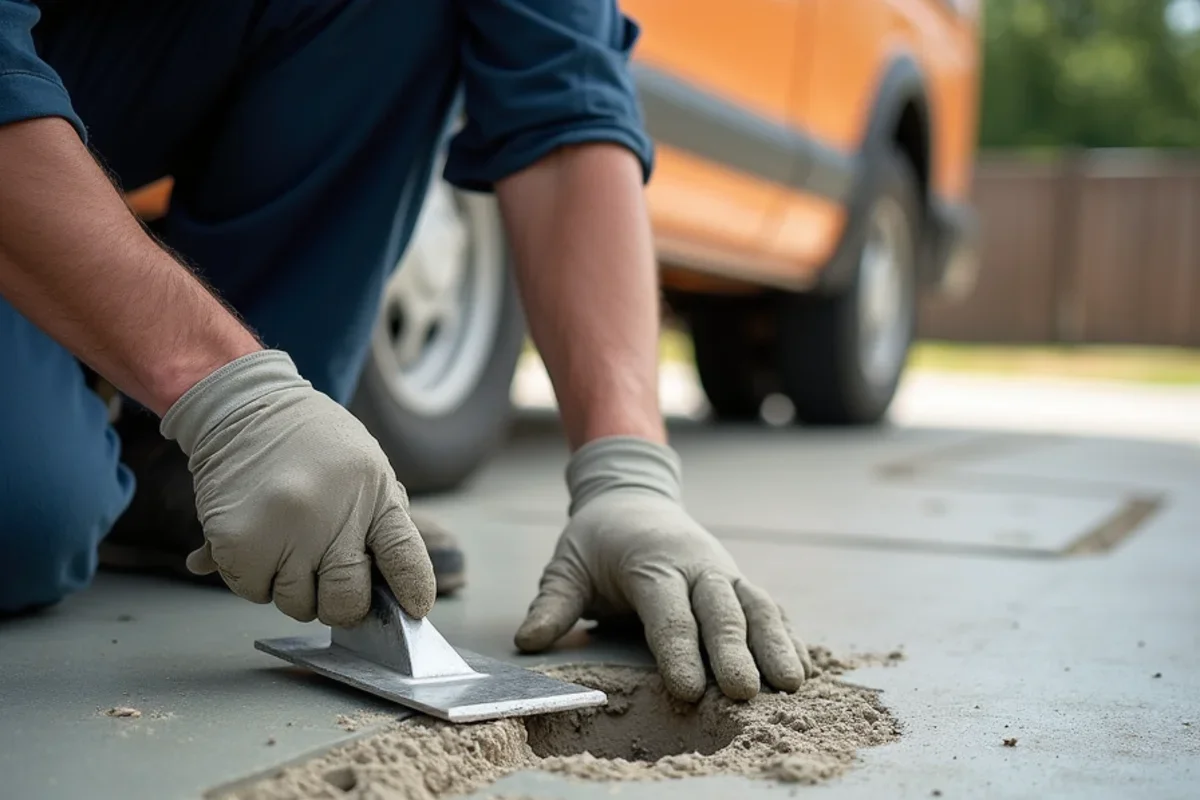
•Flush Port Patching & Color Blending: Sealing injection ports with high-strength non-shrink cement mortar matched to the existing concrete finish.
•Expansion Joint Polyurethane Sealing: Sealing slab perimeter joints to prevent future stormwater runoff from entering the subbase.

Polyurethane Foam Lifting vs. Traditional Mudjacking: Why It Matters

Property owners researching slab leveling frequently compare modern polyurethane lifting to old-fashioned mudjacking. The engineering advantages of polyurethane are decisive:

•Drill Port Size (5/8-inch vs. 2 inches): Traditional mudjacking requires drilling large, unsightly 2-inch holes that permanently scar decorative concrete. Polyurethane requires tiny 5/8-inch ports (about the diameter of a penny) that disappear once patched.
•Installed Weight (2–4 lbs/cu ft vs. 100+ lbs/cu ft): Mudjacking pumps heavy limestone slurry and cement that adds tremendous dead weight onto already weak, failing subsoils, often triggering secondary settlement. Geotechnical foam adds virtually zero weight while providing 100+ PSI compressive support.
•Moisture Resistance: Mudjacking slurry can wash away during heavy South Carolina rainstorms. Closed-cell polyurethane is 100% waterproof and hydrophobic, functioning as an impermeable moisture barrier.
•Cure Time & Usability: Mudjacking requires 24 to 48 hours to dry before use. Polyurethane cures to 90% structural strength in just 15 minutes, allowing you to walk or park on the slab immediately.

When Leveling Works vs. When Slab Replacement Is Required

Not every failing slab can be lifted. We evaluate concrete feasibility honestly on site:

•Candidate for Leveling: Slabs that have settled or tilted uniformly and remain intact with fewer than two or three hairline cracks. Porch steps, pool deck panels, patio slabs, and driveway approach panels are prime candidates.
•Mandatory Replacement: Slabs that are shattered into spiderweb fragments (alligator cracking), heavily spalled down to exposed aggregate, or severely fractured across multiple fault lines cannot maintain structural cohesion during a lift and must be saw-cut, excavated, and repoured.

Municipal & HOA Safety Compliance in Aiken County

Uneven concrete creates severe liability exposure. In municipalities like North Augusta and Aiken, as well as strict HOAs like Woodside Plantation and Riverwood, sidewalk offsets greater than 1/4 inch are classified as trip hazards requiring immediate remediation. We provide certified documentation and fast turnaround to resolve HOA violation letters and municipal safety notices.

Why Property Owners Choose FPC Construction for Slab Leveling

Leveling concrete requires precise hydraulic control and local geotechnical expertise:

•1-Hour Callback Guarantee: Contact our North Augusta dispatch office, and our concrete project lead will return your call within 60 minutes.
•48-Hour On-Site Engineering Survey: We inspect your settled slabs within 48 hours to determine lifting feasibility and measure void spaces.
•Itemized 24-Hour Proposals: You receive a detailed written quote itemizing port locations, polymer volume, and warranty terms within 24 hours.
•Verified SC Licensing & $2M Insurance: Fully licensed through the SC LLR Contractor's Licensing Board, backed by $2M commercial liability coverage.
•Zero Landscape Damage: No heavy trucks or skid steers cross your lawn. All injection hoses are routed cleanly from our service vehicle.
Direct Project Discussion · North Augusta Dispatch

Need Advice on South Carolina Subgrades or Drainage?

Speak directly with our project lead about slab thickness, soil stabilization, or emergency washout repair. Guaranteed 1-hour callback.

Call (803) 640-2595
Site Diagnostics

Common Signs You Need Sunken Concrete Leveling

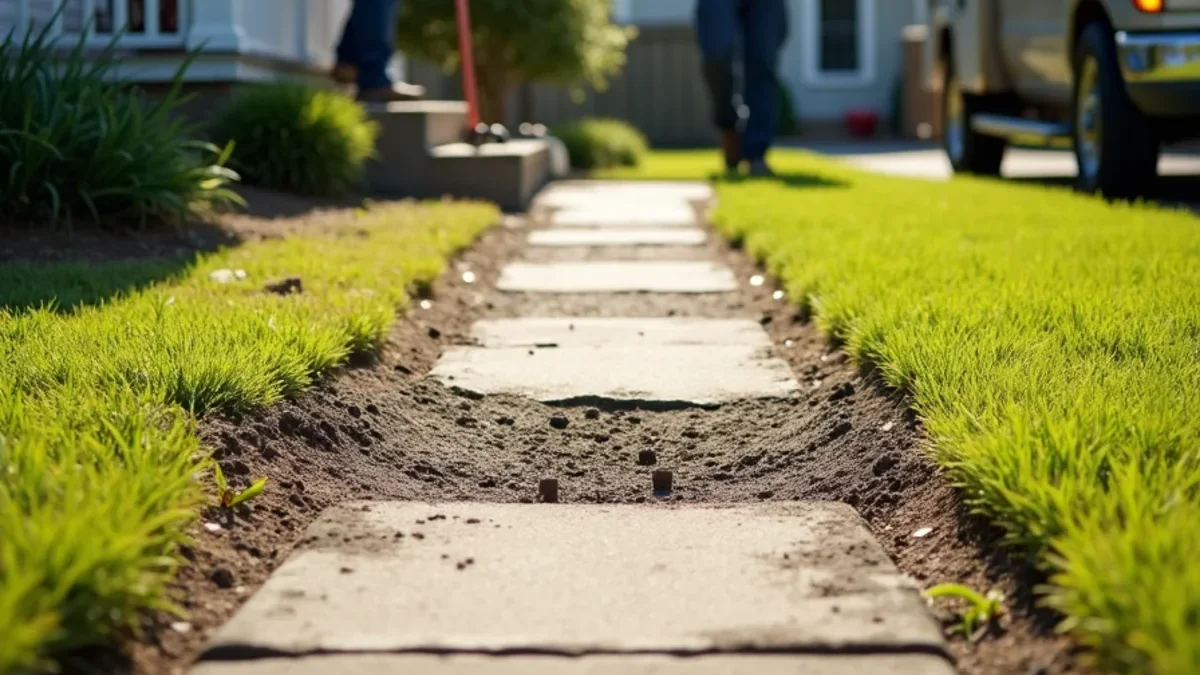
Front porch steps pulling away from home foundation, creating a dangerous widening gap
Patio slab pitched inward toward exterior siding, funneling rainwater into weep screeds
Garage entry slab settled several inches lower than driveway, causing severe vehicle tire bumps
Sidewalk panel dropped down, creating an abrupt 1- to 2-inch tripping hazard
Pool deck slabs settling and becoming uneven, exposing sharp concrete edges to bare feet
Installation Methodology

Our 6-Step Pour & Engineering Process

01

Elevation Laser Measurement

We map slab pitch using laser transits to calculate exact lift points and determine underlying void volume.

02

Micro-Drill Access Ports

Small 5/8-inch ports are drilled through the concrete slab at strategic hydraulic lift locations.

03

High-Density Material Injection

Expanding closed-cell structural polyurethane polymer is injected beneath the slab under controlled pressure.

04

Controlled Precision Lift

As the polymer expands, it compacts loose subgrade soils, fills all void pockets, and lifts the slab back to laser-level alignment.

05

Port Patching & Seal

Drill ports are sealed flush with structural non-shrink cement mortar matched to the existing concrete color.

06

Immediate Usability Check

The polymer cures to full load-bearing strength within 30 minutes, allowing immediate foot and vehicle traffic.

Engineering Execution in the Field
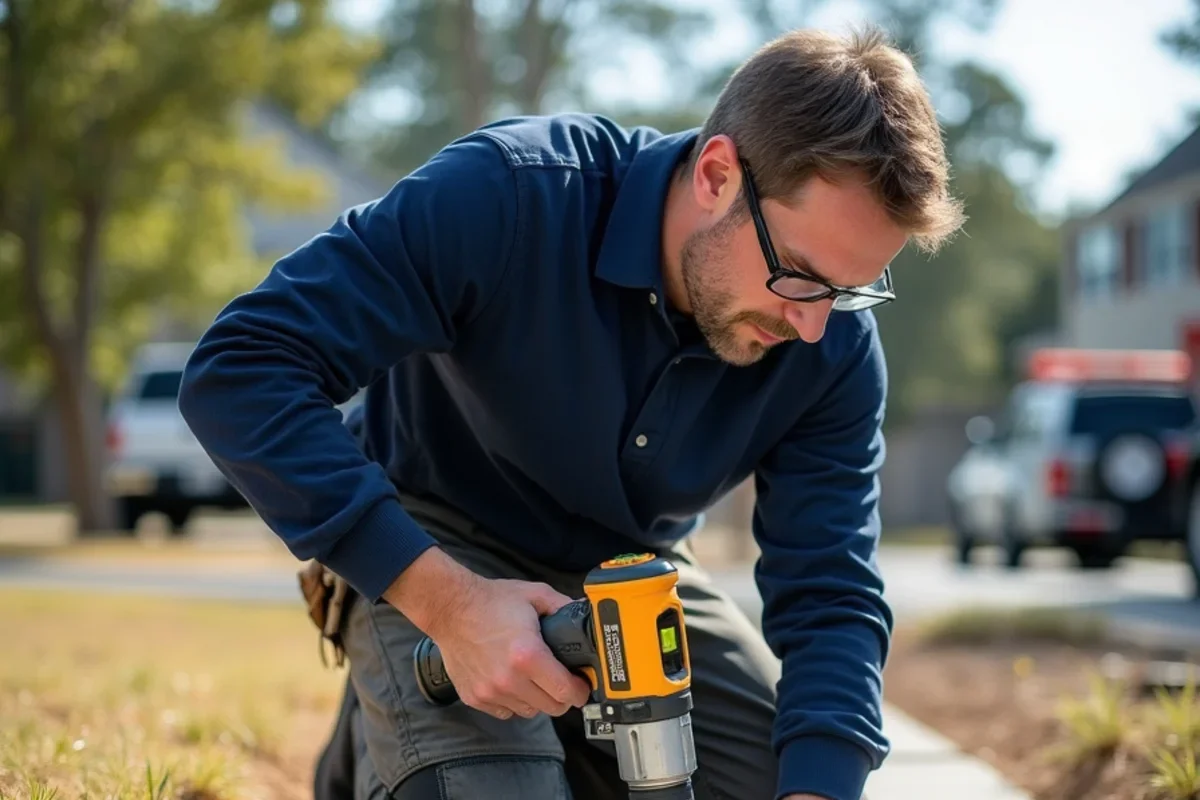
Technician drilling 5/8-inch penny-sized injection port holes through settled concrete slab
Precision 5/8-inch drill ports penetrating slab without cracking or structural damage.
Geotechnical injection gun delivering two-part expanding high-density polyurethane foam beneath slab
Hydrophobic expanding polyurethane foam compressing loose subsoils and filling voids.
Digital smart level and laser detector monitoring concrete slab rising millimeter by millimeter
Continuous laser monitoring verifying slab returns to exact flush grade with zero over-lift.
Non-shrink polymer cement mortar being troweled into drill ports to match concrete surface color
Color-matched non-shrink polymer grout patches leaving virtually invisible drill ports.
Transparent Estimating

Key Pricing Factors for Sunken Concrete Leveling

Every property has distinct access constraints, elevation grades, and subsoil compositions. Our quotes are 100% itemized so you know exactly what is included:

  • ✓Square footage of settled slab area and total vertical lift distance required
  • ✓Volume of subsurface void space underneath the slab requiring high-density fill material
  • ✓Weight load capacity required (foot traffic patio vs vehicle storage garage floor)
  • ✓Underground utility proximity and water line clearance beneath the settled zone
  • ✓Structural condition of the slab (lifting requires a slab that is mostly intact rather than shattered)
Expert Guidance

Frequently Asked Questions: Sunken Concrete Leveling

Common questions regarding sunken concrete leveling across South Carolina and Aiken County.

Concrete slabs sink when the underlying subgrade soil shifts, washes out, or consolidates. In Aiken County, loose Sandhills sand easily washes away under intense rainstorms, while heavy red clay shrinks during summer droughts, leaving hollow voids beneath heavy slabs.
North Augusta, Aiken County & Midlands Dispatch

Get Your Free On-Site Quote for Sunken Concrete Leveling

Poured with 4,000 PSI ready-mix, compacted stone aggregate, and tied steel rebar. Written quote in 24 hours.

Licensed & Insured South Carolina ContractorWritten Itemized Quote in 24 Hours
Tap to Call (803) 640-2595
1-Hr Callback Guarantee · Free On-Site Quote