
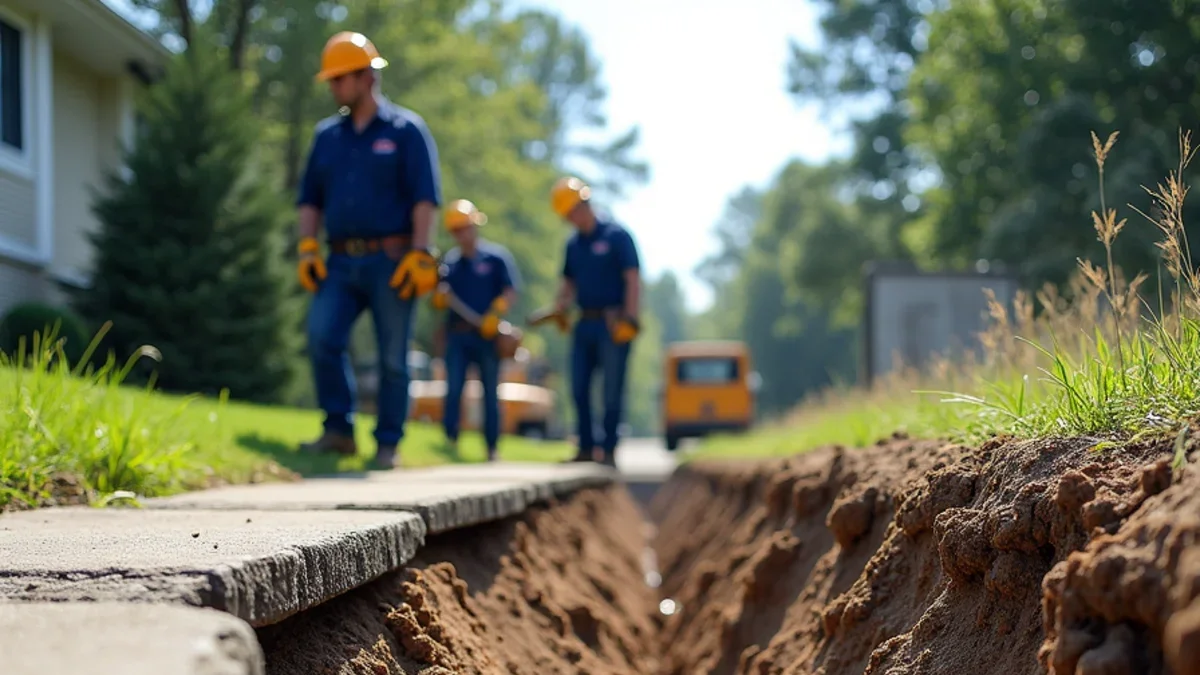
Hurricane Helene (September 2024) exposed severe vulnerabilities in Aiken County driveways, causing catastrophic edge washouts, root upheaval, and culvert collapses. Restoring storm-damaged flatwork requires excavating organic debris, backfilling root craters with compacted stone aggregate, doweling into sound panels with #4 rebar, and armor-grading swales to prevent future erosion.
Hurricane Helene: The Unprecedented Impact Across Aiken County
In late September 2024, Hurricane Helene tore through Aiken County, North Augusta, and the Central Savannah River Area, delivering an unprecedented combination of 80+ mph wind gusts and torrential rainfall. While residential roofs and fallen timber received immediate media attention, property owners soon discovered a secondary crisis: catastrophic structural damage to concrete driveways, culvert transitions, and retaining walls.
Aiken County sits atop the fragile Atlantic Fall Line Sandhills. The combination of saturated, cohesionless quartz sand and hurricane-force tree falls created a perfect storm for concrete flatwork destruction. Hundreds of driveways were shattered by falling mature pines, buckled by massive root-plate upheaval, or undermined by flash-flood runoff scouring subgrade soils away.
Investing in specialized Storm Damage Concrete Repair and precision Concrete Washout & Void Repair ensures that post-storm repairs permanently restore structural integrity rather than masking underlying subgrade voids.
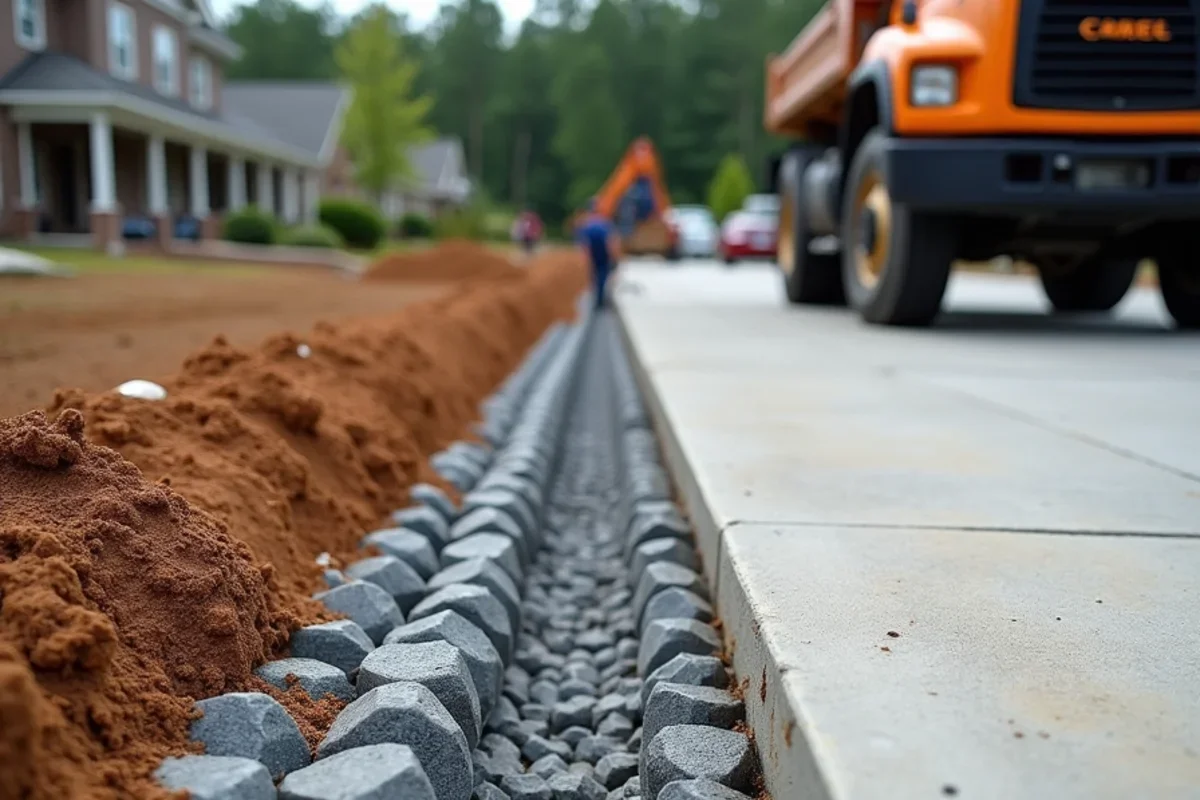
The 3 Primary Failure Modes: Uprooted Pines, Washouts & Culvert Collapses
Forensic engineering assessments across Aiken County revealed three primary mechanisms of driveway failure during Hurricane Helene:
1. Root Plate Levering and Upheaval Mature loblolly pines and sweetgum trees possess wide, shallow root plates in sandy soil. When hurricane gusts toppled these trees, the pivoting root plates acted as massive hydraulic jacks, lifting 4,000-pound concrete driveway panels 6 to 18 inches into the air. When tree removal crews subsequently sawed off the trunks, the uplifted panels did not fall back into place—they remained suspended over cavernous subterranean craters.
2. High-Velocity Shoulder Washouts Helene dropped 8 to 12 inches of rain in a 24-hour period, overwhelming municipal roadside swales. Flash-flood sheet runoff rushed along driveway margins, scouring fine Sandhills sand out from underneath the edges. Slabs that appeared intact from above became unreinforced cantilever shelves that cracked the moment heavy utility trucks drove over them.
3. Driveway Entrance Culvert Collapses In rural and suburban areas across Aiken and Wagener, driveway approaches span corrugated metal or concrete drainage culverts. Debris dams formed by fallen branches blocked culvert pipes, forcing water to flow over the top of the driveway. The rushing water stripped unreinforced asphalt and concrete aprons, collapsing culvert pipes and severing property access.
Detecting Hidden Cavities: Post-Storm Diagnostic Testing
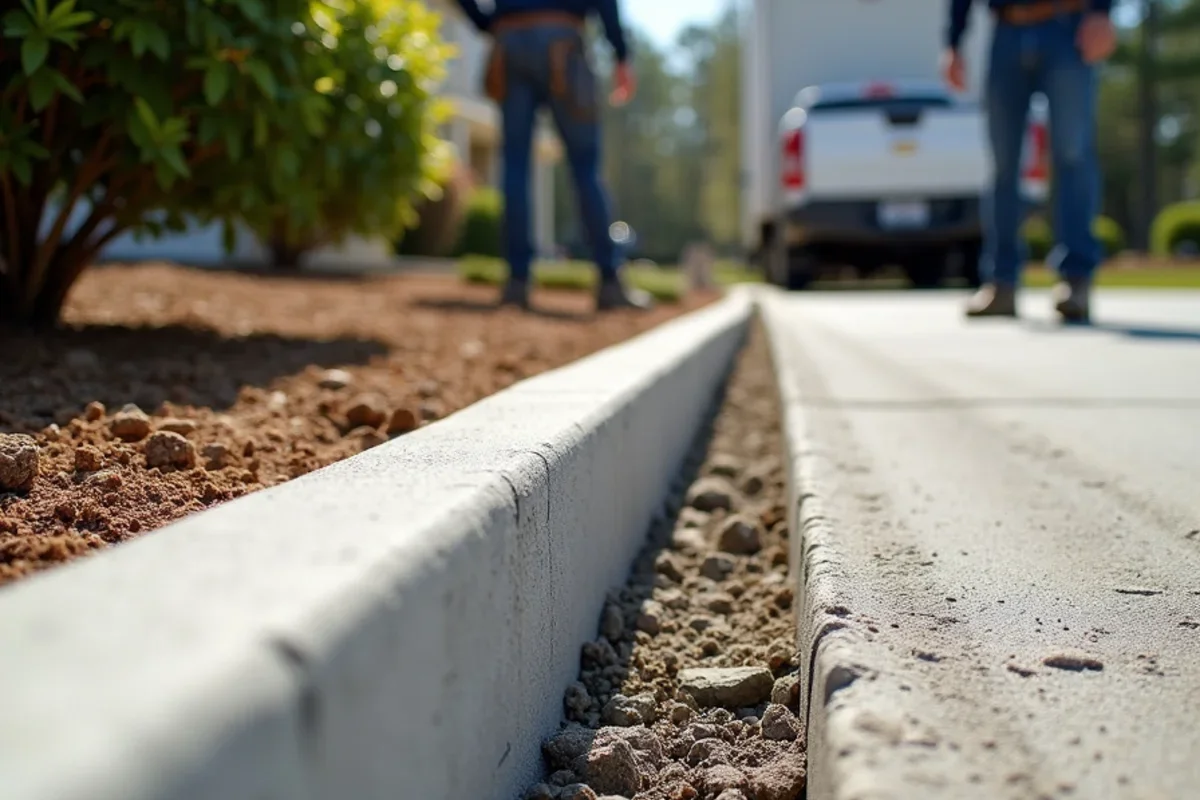
The most dangerous consequence of severe storms is the hidden void—a hollow cavity beneath a slab that shows zero cracking on the surface. Property owners continue parking their vehicles unaware that a 3-foot underground void exists beneath the concrete.
Technicians deploy non-destructive diagnostic methods to evaluate storm-damaged slabs:
- Acoustic Sounding Testing: Tapping the concrete surface with a surveyor's hammer to identify hollow drumming resonance versus solid high-pitched ringing.
- Optical Laser Level Profiling: Measuring millimeter elevations across panel joint lines to detect subtle downward deflection into washed-out subgrades.
- Subgrade Core Probing: Inserting calibrated steel soil probes beneath slab edges to measure void depth, soil looseness, and groundwater saturation.
The Engineered Post-Storm Restoration Process
Patching concrete over a storm-ravaged site guarantees failure. FPC Construction executes a comprehensive 6-step engineering restoration:
- Step 1: Surgical Diamond Saw-Cutting: We saw-cut clean, full-depth joint lines along existing control joints to isolate broken panels without transferring fractures to sound concrete.
- Step 2: Hydraulic Demolition & Debris Extraction: We break up shattered concrete panels and haul the debris to licensed recycling facilities.
- Step 3: Root Crater & Decaying Organic Excavation: We excavate all buried tree root fragments and organic muck from the subgrade. Any wood left underground will rot and cause future sinkholes.
- Step 4: Lift-Compacted CR-14 Aggregate Base: We backfill the excavation with South Carolina DOT approved CR-14 crusher-run aggregate in 4-inch lifts, compacting each lift to 95% Standard Proctor density with reversible plate compactors.
- Step 5: Epoxy Rebar Doweling Matrix: Into the surviving sound concrete panels, we drill horizontal holes and epoxy-anchor Grade 60 #4 steel rebar dowels every 18 inches, tying into a new suspended steel grid on chairs.
- Step 6: 4,000 PSI Ready-Mix Placement & Texture: We pour high-strength, low-water concrete, hand-tool joints, and apply a non-slip broom finish matching the original driveway.
Armoring Your Driveway Against the Next 500-Year Storm
Restoring a driveway after a hurricane offers a unique opportunity to build back stronger. We incorporate permanent storm-hardening defenses:
- Reinforced Concrete Headwalls: Cast-in-place concrete retaining headwalls at culvert pipe entrances prevent roadside ditch water from ever eroding driveway shoulders.
- Rip-Rap Stone Armoring: Lining drainage swales with heavy 6-to-12-inch granite rip-rap stone underlain with geotextile fabric absorbs water velocity and eliminates soil scour.
- Thickened Perimeter Slab Edges: Pouring 6-to-8-inch turn-down footings along driveway edges creates a physical concrete wall that prevents rainwater from channeling beneath the slab.
Storm Damage Restoration Specification Table
| Damage Scenario | Diagnostic Sign | Primary Structural Risk | Engineered Repair Scope |
|---|---|---|---|
| Root Plate Upheaval | Slabs lifted 2"–12", fractured joints | Cavernous subgrade voids, lost slope | Full panel demo, root excavation, compacted stone backfill, rebar doweling |
| Edge Washout / Void | Daylight under slab, hollow sounding | Cantilever shear failure under axle loads | Flowable slurry fill or polyurethane foam injection, stone shoulder armor |
| Culvert Washout / Blowout | Sunken driveway entrance, pipe visible | Complete loss of property vehicular access | Excavate pipe, install new reinforced concrete pipe, stone bedding, concrete apron |
| Multiple Webbed Fractures | Shattered spiderweb cracks across >30% | Total subgrade liquefaction & failure | Complete driveway tear-out, 4" aggregate base rebuild, new 4,000 PSI pour |
Next Steps: Schedule Your Post-Storm Engineering Survey
If Hurricane Helene or severe weather damaged your concrete driveway, culvert, or retaining wall in Aiken County, North Augusta, or surrounding South Carolina communities, contact FPC Construction at (833) 334-0468 for a free on-site structural damage assessment and written insurance scope within 24 hours.
Heavy-Duty Drainage Culverts and Masonry Headwalls
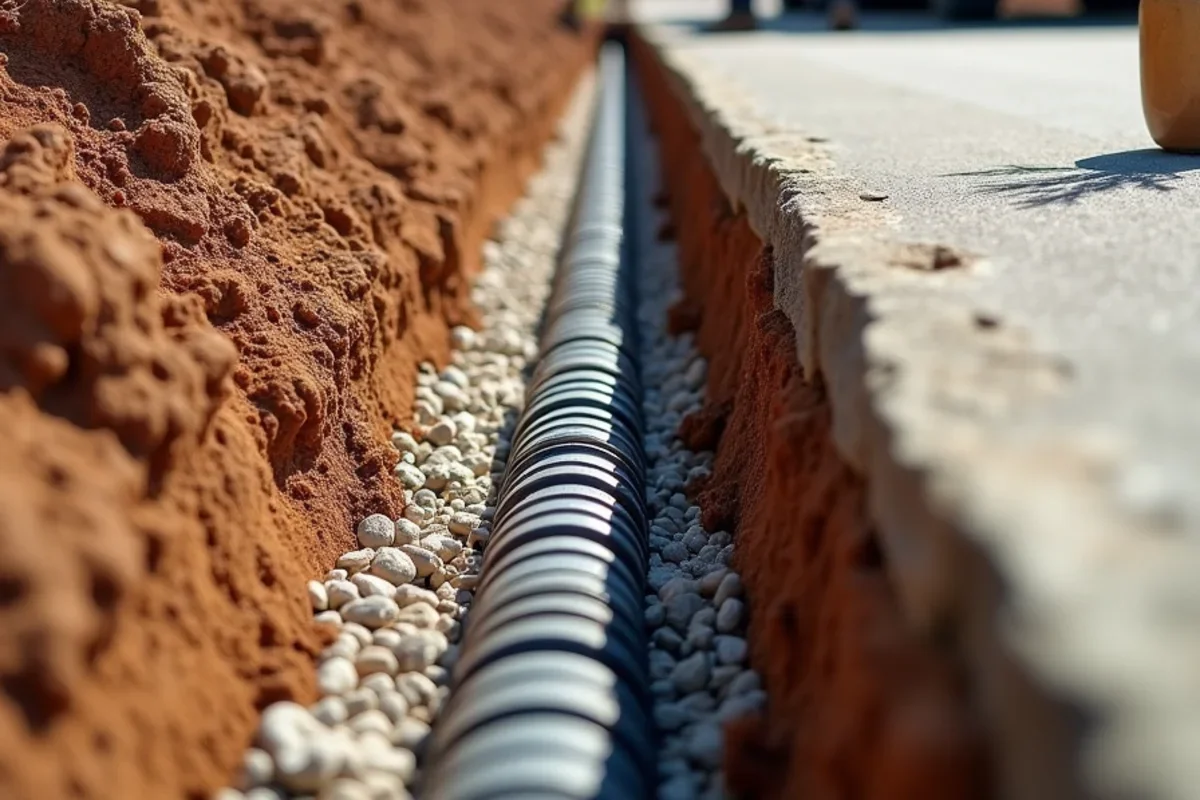
To prevent future tropical storms from washing out rural driveway approaches across Aiken County, FPC Construction replaces undersized corrugated metal pipes with reinforced concrete pipes (RCP) or dual-wall smooth-interior HDPE pipes. We cast solid concrete headwalls at pipe inlets and outlets, backfilling with #57 washed stone and 6-to-12-inch granite rip-rap to absorb torrential water velocity and permanently protect driveway shoulders.
Rip-Rap Apron Sizing & Non-Woven Geotextile Scour Underlayment Installation
A major takeaway from Hurricane Helene throughout the CSRA was that concrete driveways built on rolling hills and steep slopes suffered massive edge undermining wherever runoff water exited the slab without energy dissipation. When concentrated sheets of stormwater flow off a concrete driveway onto exposed topsoil, the hydraulic velocity rapidly carves deep erosion gullies, scouring soil from beneath the slab edges. To prevent catastrophic edge failure during future severe weather events, contractors must install Class 1 or Class 2 rip-rap stone aprons along driveway shoulder transitions. Beneath the rip-rap, installing a heavy-duty 6-ounce non-woven geotextile filter fabric is mandatory. The geotextile prevents high-velocity runoff from churning up and washing away underlying subgrade silt while allowing water to dissipate harmlessly across natural drainage swales.
Subsurface Hydrostatic Pressure Relief Systems for Embankment Driveways
On cut-and-fill hillsides common to North Augusta and Belvedere, torrential rainfalls saturate uphill soils, generating immense lateral hydrostatic pressure against the underside of concrete driveway slabs. Without adequate drainage pathways, this trapped groundwater creates upward buoyant pressure and washes out fine sands, creating hollow voids beneath the concrete. Incorporating subsurface relief drainage—including perforated PVC French drains, geotextile-wrapped collector pipes, and aggregate filter beds along the uphill driveway margin—channels subterranean water away from the slab perimeter before it can destabilize the subbase. These engineered drainage safeguards ensure that even multiday torrential downpours cannot undermine the structural integrity of your concrete flatwork.
Speak Directly with a South Carolina Concrete Specialist
Guaranteed 1-hour callback · On-site evaluation in 48 hours · Free written estimate
Article Frequently Asked Questions
Key takeaways and common homeowner inquiries answered by our concrete team.