
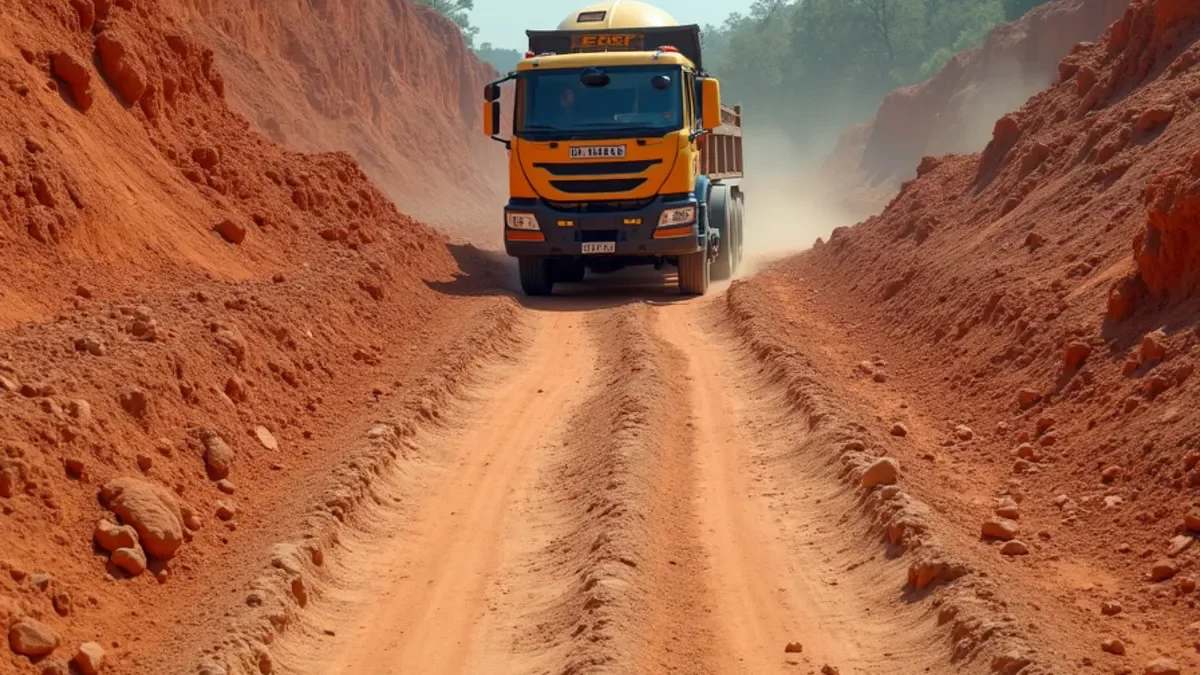
Pouring concrete in South Carolina requires radically different engineering for Piedmont expansive red clay versus Coastal Plain Sandhills sand. Red clay demands deep excavation, aggregate cushions, and tight control joints to absorb seasonal shrink-swell cycles, while loose Sandhills sand requires mechanical compaction and thickened edges to stop lateral washouts.
The Fall Line Divide: Piedmont Red Clay vs Coastal Plain Sandhills
Few states in the nation feature as dramatic a geological contrast within a single metropolitan region as South Carolina. Running directly through North Augusta, Aiken County, and the Midlands is the Atlantic Seaboard Fall Line—the ancient prehistoric shoreline where the hard crystalline bedrock of the Piedmont Plateau meets the soft, sedimentary deposits of the Atlantic Coastal Plain.
On one side of the line—in communities like Edgefield, Saluda, and McCormick—contractors build upon dense, iron-rich Piedmont red clay (the famous Cecil soil series). Just a few miles to the south—in Belvedere, Aiken, and Wagener—the ground shifts entirely into the deep, porous quartz dunes of the Carolina Sandhills.
Pouring concrete flatwork using a generic 'one-size-fits-all' approach across both soils is a recipe for early structural failure. Red clay and sand possess opposite physical, chemical, and hydrological properties. Each soil demands fundamentally different excavation depths, aggregate base depths, control joint layouts, and steel reinforcement designs.
Investing in localized flatwork—from certified providers of Concrete Driveway Installation and structural Concrete Slabs & Foundations—guarantees that your slab is engineered specifically for your neighborhood's soil mechanics.
Piedmont Red Clay: The Chemistry of Shrink-Swell Movement
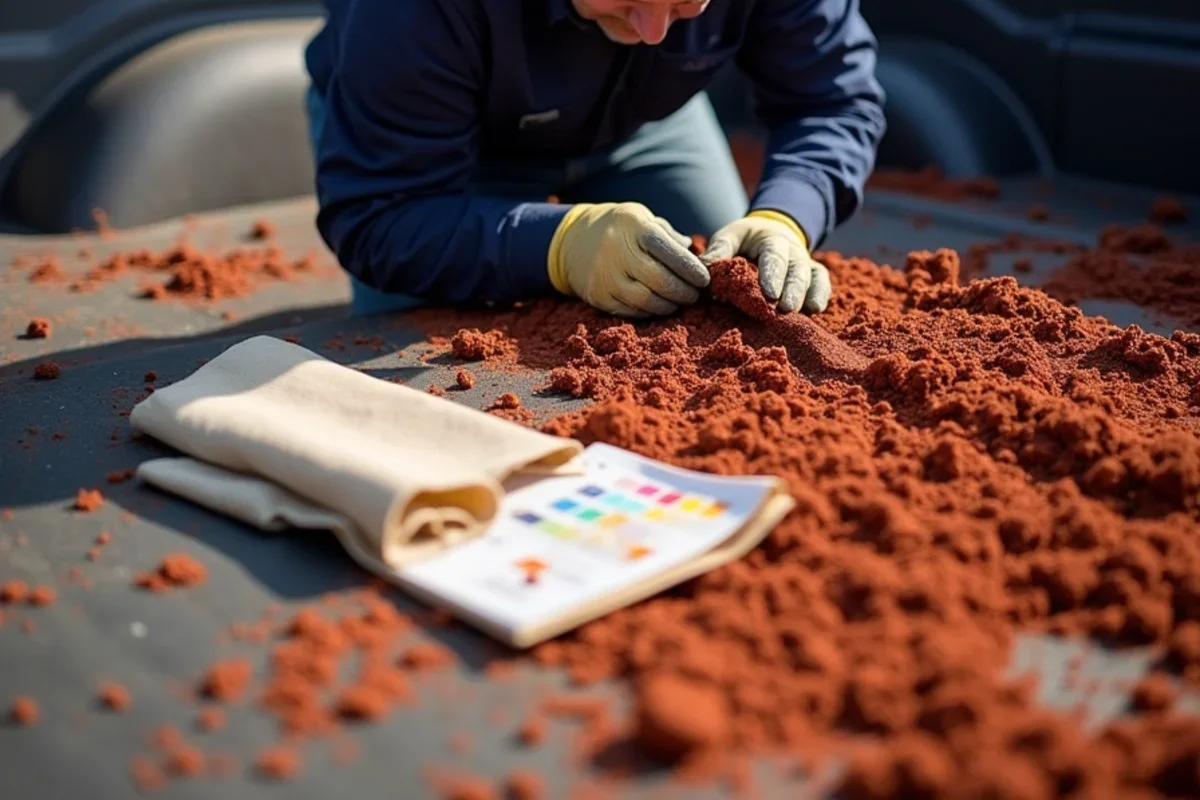
Piedmont red clay derives its deep crimson color from oxidized iron minerals, but its defining engineering characteristic is high plasticity and volumetric instability:
The Shrink-Swell Cycle Piedmont clay is composed of microscopic, microscopic sheet-like clay particles. When saturated during wet South Carolina springs, water molecules wedge between the clay sheets, causing the soil to swell upward and outward with tremendous hydraulic force (up to 3,000 pounds per square foot of upward heave). When hot August droughts bake the Midlands, the clay loses moisture, contracts, and shrinks away from the bottom of the slab.
The Concrete Impact If a concrete slab is poured directly over unconditioned red clay, this seasonal movement creates cyclical upward bending stresses followed by sudden loss of subgrade support. Unreinforced slabs will develop extensive longitudinal cracks and broken corners within 24 to 36 months.
Sandhills Sand: Rapid Drainage and Severe Washout Risks
In stark contrast to red clay, Carolina Sandhills soil is composed of medium-to-coarse quartz sand grains with virtually zero clay content:
Zero Plasticity, Zero Volumetric Swelling Sandhills sand does not expand when wet, nor does it shrink when dry. From a pure expansion standpoint, it provides a stable subgrade that will not heave against a concrete slab.
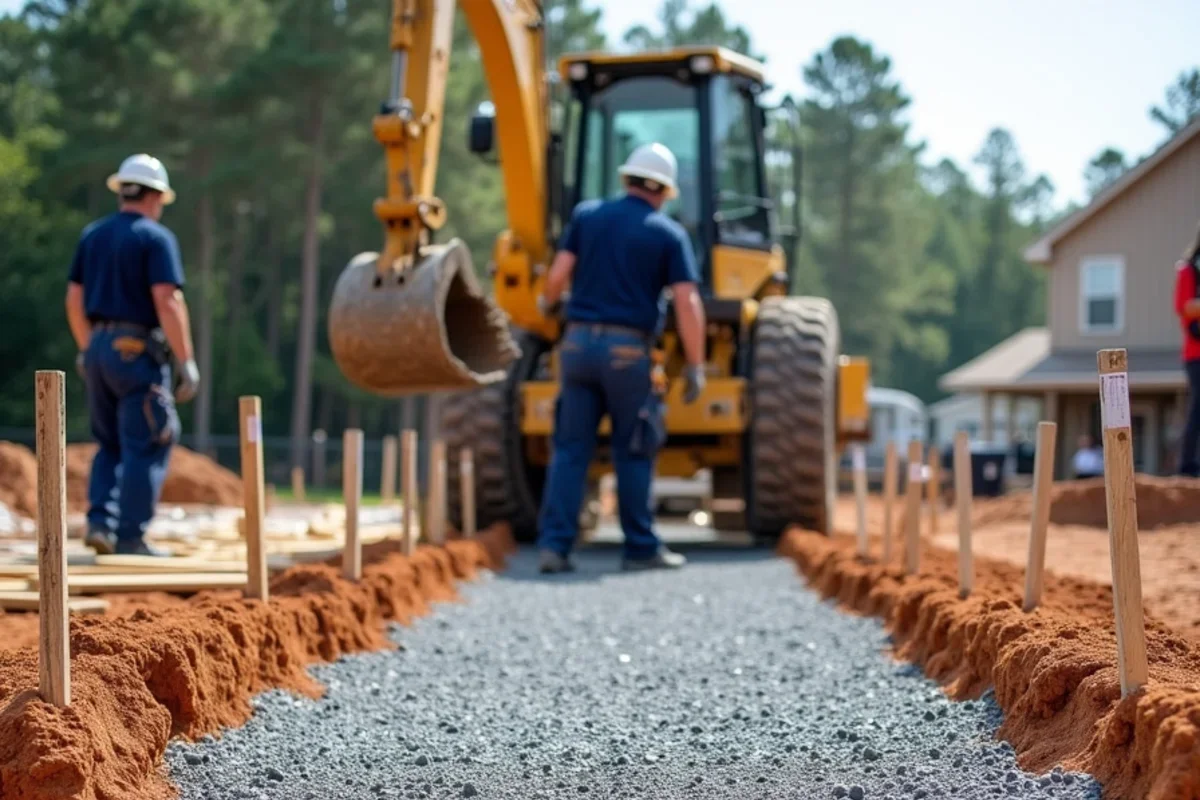
The Erosion and Liquefaction Vulnerability However, Sandhills sand is completely non-cohesive. Because sand grains do not stick together, moving water washes sand away with zero resistance. Concentrated downspout runoff or roadside storm flow easily scours massive subterranean voids beneath driveways and patios. Furthermore, loose sand grains consolidate under vehicle vibration, causing slabs to settle if not mechanically compacted prior to pouring.
Side-by-Side Concrete Engineering Specification Table
| Engineering Parameter | Piedmont Red Clay (Edgefield, Saluda) | Sandhills Quartz Sand (Aiken, North Augusta) |
|---|---|---|
| Primary Failure Mode | Volumetric shrink-swell heave and soil settlement | Subgrade water washout and lateral edge sloughing |
| Excavation Depth | 6 to 8 inches (strip expansive clay layers) | 4 to 6 inches (strip loose organic topsoil) |
| Aggregate Base Requirement | Min 4" to 6" CR-14 Crusher Run (Shock Cushion) | Min 4" CR-14 Crusher Run (Bridging Base) |
| Control Joint Spacing | Tight: 8 to 10-foot max intervals | Standard: 10 to 12-foot max intervals |
| Perimeter Footing Design | Deep isolation joints against foundations | Thickened 6"–8" turn-down edge footings |
| Drainage Strategy | Prevent surface water from pooling and saturating clay | Channel water away to prevent subgrade washout |
| Steel Reinforcement | #4 Grade 60 Rebar on 16" grid (Tensile Strength) | #4 Grade 60 Rebar on 18" grid (Bridging Strength) |
The Aggregate Base: How Crusher Run Solves Both Soil Problems
Despite their opposing failure modes, there is one universal engineering solution that neutralizes both red clay heave and sand erosion: South Carolina DOT approved CR-14 crusher-run stone aggregate.
Crusher run is not smooth river gravel; it is mechanically crushed, fractured blue granite rock ranging from 1.5-inch stones down to angular stone dust:
- Over Red Clay: The 4-to-6-inch compacted stone bed acts as a flexible, shock-absorbing cushion. When the underlying native clay swells, the stone aggregate shifts microscopically, dispersing upward pressure evenly across the slab rather than concentrating it at single fracture points.
- Over Sandhills Sand: When compacted to 95% Standard Proctor density, the angular granite stones interlock tightly. This stone layer acts as a rigid bridging plate that distributes concentrated vehicle wheel loads across multiple square feet, shielding the underlying loose sand from shifting.
Control Joint Spacing and Rebar Reinforcement Rules by Soil Type
Contractors must adapt finishing details to soil conditions:
Joint Spacing on Red Clay Because clay subgrades subject slabs to higher bending stresses, contraction control joints must be cut closer together. For a 4-inch slab on red clay, control joints should be spaced at a strict maximum of 8 to 10 feet apart. Cutting joints deeper (at least 1/4 the slab thickness) within 12 to 24 hours of placement ensures shrinkage stresses release invisibly inside the joint grooves.
Rebar Elevation on Both Soils Flimsy welded wire mesh laid on the dirt fails on both soils. FPC Construction exclusively installs Grade 60 #4 steel rebar elevated on plastic chairs in the middle third of the pour. On red clay, rebar resists upward soil heave; on sand, rebar bridges subterranean void pockets without allowing panel separation.
Next Steps: Build Your Slab to Match Your Soil
Never let a contractor pour concrete on your property without first inspecting your soil profile. Contact FPC Construction at (833) 334-0468 for a free on-site soil evaluation, laser grading survey, and detailed written proposal within 24 hours.
Hydration Monitoring in High-Plasticity Soil Zones
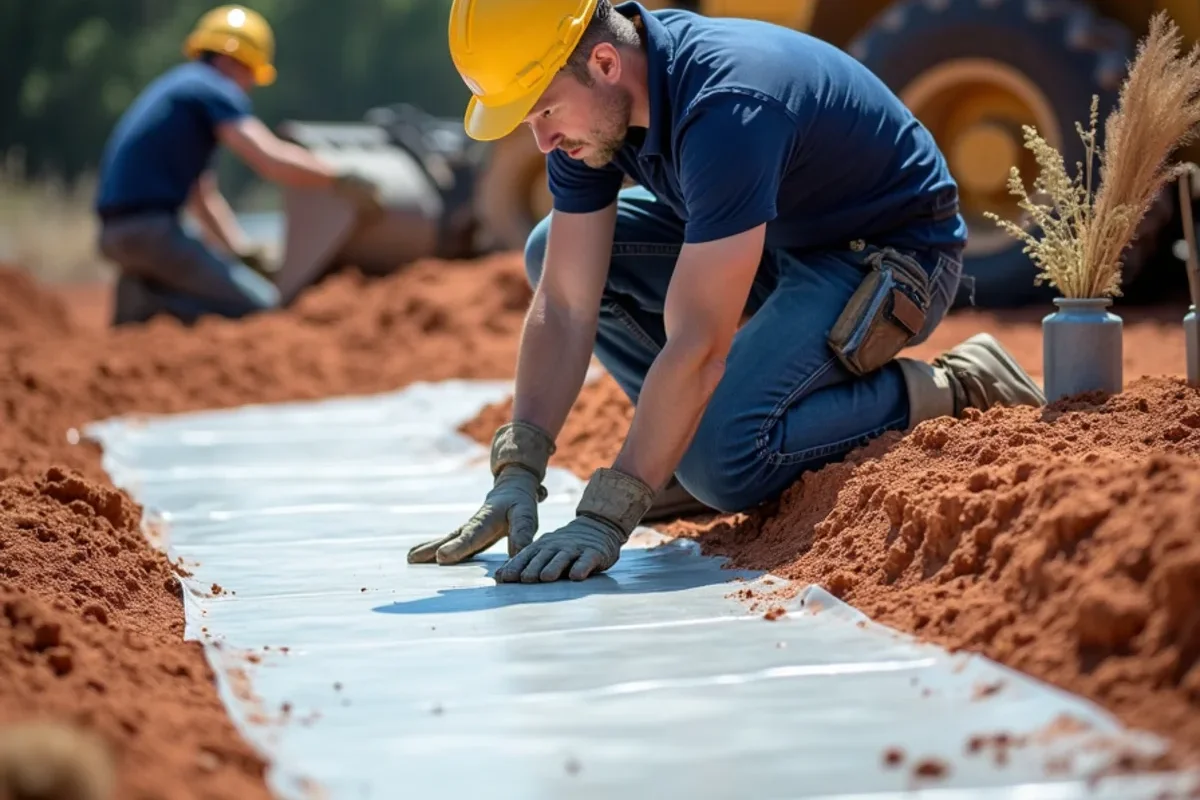
During hot summer pours over Piedmont red clay in Edgefield and Saluda counties, native soils rapidly draw moisture out of fresh concrete if not properly isolated. FPC Construction installs heavy 15-mil puncture-resistant polyethylene vapor barriers and moistens the aggregate base immediately prior to placement. We apply liquid membrane curing compounds within minutes of finishing to retain hydration moisture, ensuring the slab achieves its full 4,000+ PSI compressive strength without plastic shrinkage cracking.
Speak Directly with a South Carolina Concrete Specialist
Guaranteed 1-hour callback · On-site evaluation in 48 hours · Free written estimate
Article Frequently Asked Questions
Key takeaways and common homeowner inquiries answered by our concrete team.