
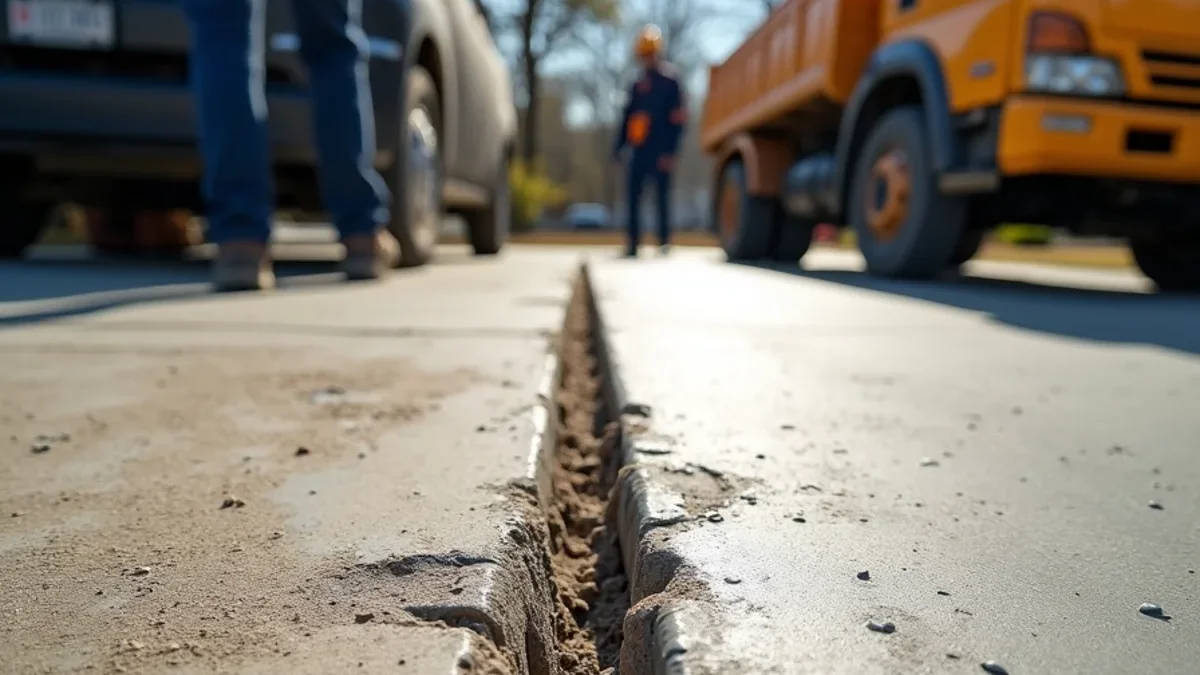
Deciding whether to repair or replace a cracked concrete driveway depends on crack severity, subgrade stability, and overall damage percentage. Isolated cracks under 1/4 inch with a stable base can be saw-cut and sealed; driveways with webbed alligator cracking, sunken panels exceeding 1 inch, or damage covering over 30% of the surface require full demolition and an engineered 4,000 PSI replacement pour.
The Core Engineering Decision: When to Patch vs When to Repour
Every South Carolina homeowner with an aging concrete driveway eventually faces the critical dilemma: should you spend hundreds of dollars patching cosmetic cracks, or invest thousands in a comprehensive demolition and replacement? In North Augusta, Aiken, and across the Midlands, making the wrong choice leads to wasted money, recurring frustration, and degraded home curb appeal.
The decision comes down to one fundamental structural principle: is the damage confined to the concrete surface, or has the subgrade foundation failed? Concrete flatwork is only as strong as the earth beneath it. Pouring cosmetic patches over an actively eroding subgrade or sinking kaolin clay layer is like painting over rotten wood.
Investing in an objective structural assessment—from certified providers of Concrete Driveway Repair and full Concrete Driveway Installation—ensures you select the most economical, long-lasting solution for your specific site conditions.
Crack Diagnostics: Hairline vs Working vs Structural Fractures
To evaluate your driveway, technicians categorize concrete cracks into three distinct severity levels:
Level 1: Hairline Shrinkage Cracks (Non-Structural) Hairline cracks measuring less than 1/8 inch wide that show zero vertical displacement (both sides of the crack are perfectly flush) are typically cosmetic plastic shrinkage cracks. These occur during the first 24 hours of curing as water evaporates from the mix. They do not threaten structural capacity and can be sealed with flexible polyurethane joint sealant to prevent water infiltration.
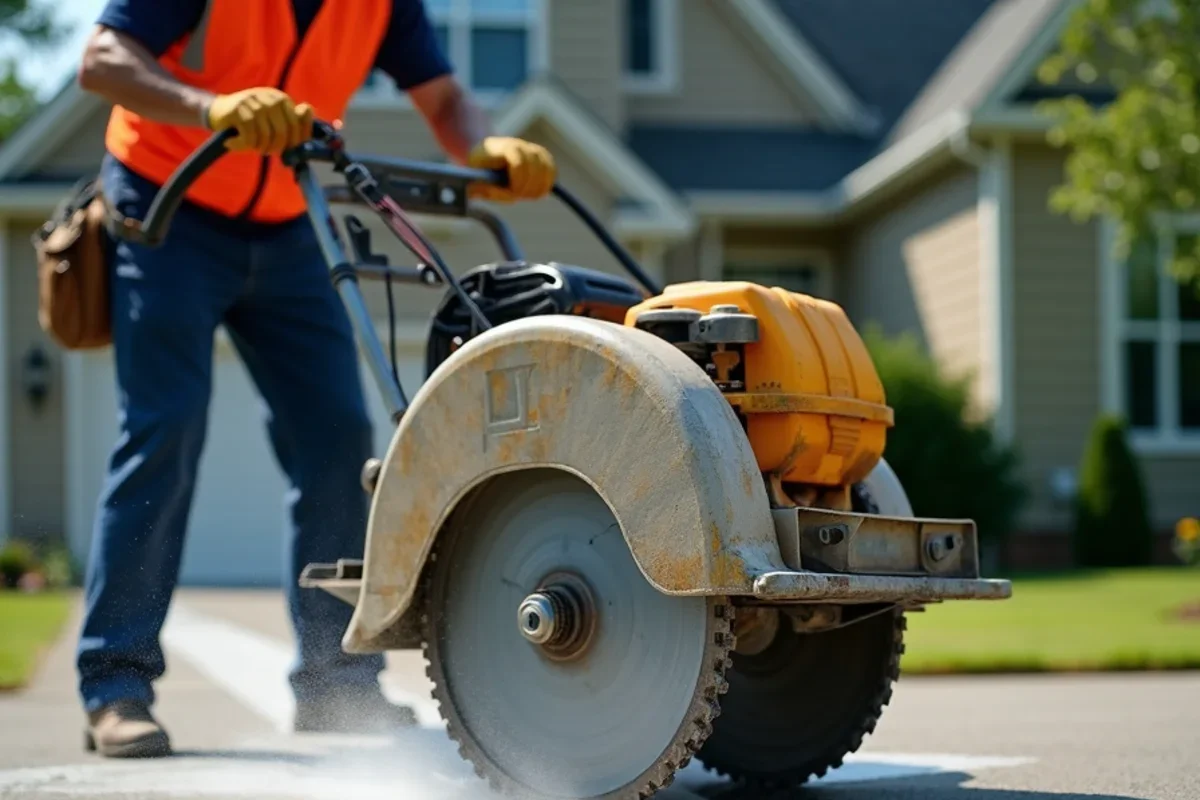
Level 2: Working Joint Cracks (Moderate Severity) Cracks measuring 1/8 to 1/4 inch wide that open and close slightly between summer heat and winter cold are active 'working cracks'. If the panels remain level and the subgrade is solid, these cracks can be routed out with a diamond blade and filled with commercial-grade elastomeric sealants.
Level 3: Structural Displacement Fractures (Severe Failure) When a crack exceeds 1/4 inch in width and one side of the slab has settled lower than the other—creating a vertical lip or trip ledge—the concrete has suffered structural shear failure. This indicates that the stone subbase has washed away or the subgrade has collapsed. Surface patching will fail within months; this section requires full panel replacement or complete driveway tear-out.
Cost Comparison: Sealing vs Resurfacing vs Full Tear-Out
Understanding the financial trade-offs between repair options prevents homeowners from falling into the 'overlay trap':
| Restoration Approach | Typical Cost per Sq Ft | Expected Lifespan | Primary Benefit | Major Limitation in SC Climate |
|---|---|---|---|---|
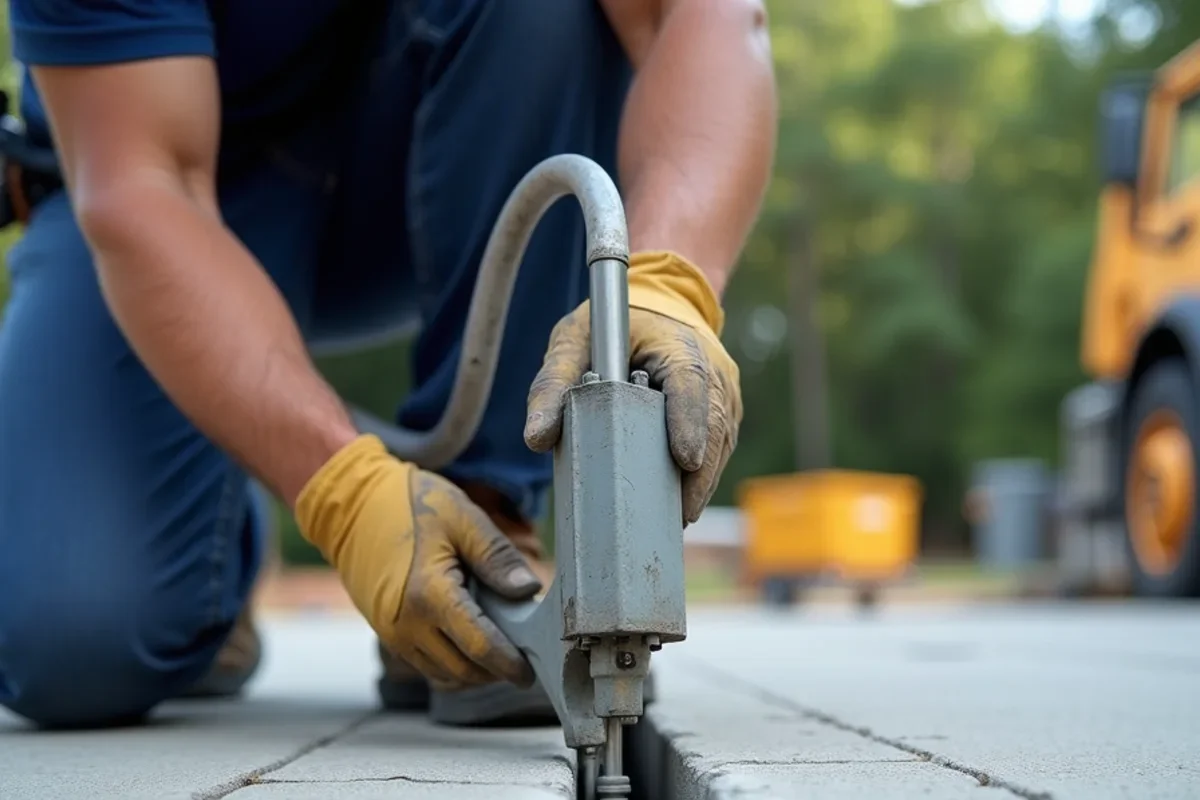
| Joint Routing & Poly Sealing | $1.50 – $3.00 | 5–8 years | Low cost, stops water intrusion | Highly visible repair lines; does not fix unlevel panels |
| Thin Polymer Resurfacing (Overlay) | $4.00 – $8.00 | 2–5 years | Restores uniform surface appearance | Reflective cracking: cracks re-emerge quickly in SC heat |
| Isolated Panel Replacement | $7.00 – $11.00 | 20+ years | Fixes localized damage permanently | Slight color variation between old and new panels |
| Complete Demo & Repour | $8.50 – $14.00 | 30–40 years | Fresh subgrade, 4,000 PSI mix, tied rebar | Higher upfront capital expenditure |
Subgrade Realities: Aiken Sandhills vs Edgefield Red Clay
In South Carolina, native geology determines whether a driveway repair will hold:
The Aiken Sandhills Dilemma In Aiken County and Clearwater, native soils consist of fine quartz sand. When roof downspouts or storm runoff penetrate through driveway cracks, water rapidly flushes the sand out from underneath the slab. What began as a 1/8-inch crack quickly becomes a hollow subterranean void. Patching the surface while the sand washes away guarantees slab collapse under the first heavy SUV.
The Piedmont Red Clay Challenge In northern Aiken County and Edgefield County, dense red clay soils exhibit high shrink-swell plasticity. During hot August droughts, clay shrinks away from the bottom of the slab; during spring rainfalls, it swells and heaves upward. If a driveway was poured without a 4-inch compacted aggregate base (crusher run), seasonal clay movement will snap cosmetic patches like toothpicks.
Lifespan and Resale Value Considerations
A cracked, stained, and uneven driveway is one of the first things prospective home buyers, appraisers, and home inspectors notice. According to regional real estate data, an unsightly driveway can decrease home perceived value by $5,000 to $15,000 and trigger buyer demands for massive closing repair credits.
Furthermore, uneven concrete surfaces represent an immediate premises liability risk. Under the Americans with Disabilities Act and municipal safety codes, offsets over 1/4 inch are actionable trip hazards. Installing a brand-new, rebar-reinforced concrete driveway not only eliminates liability but provides an immediate 75% to 85% return on investment in property value.
The FPC Construction Engineered Driveway Replacement Standard
When repair is no longer economically viable, FPC Construction rebuilds your driveway from the subsoil up:
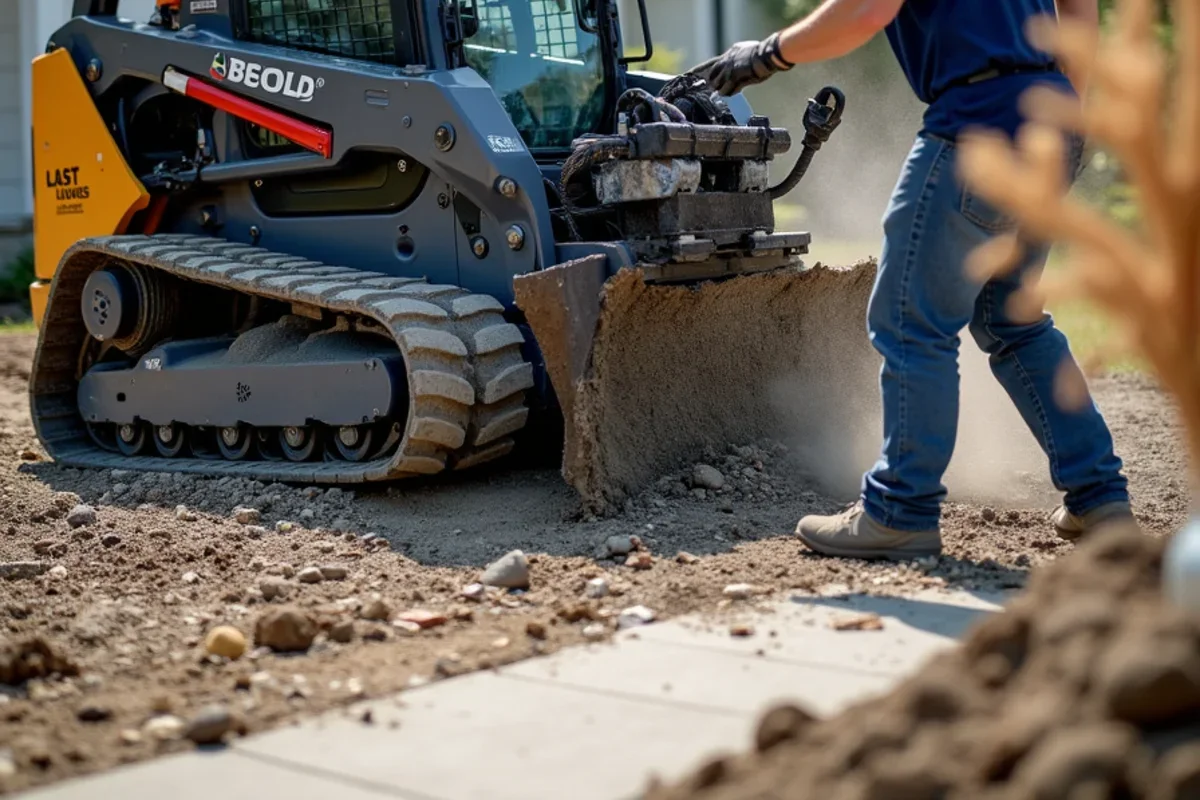
- Hydraulic Demolition & Off-Site Disposal: We break up old unreinforced concrete with hydraulic breakers and recycle the debris.
- Subgrade Excavation: We strip weak organic soils down to stable native subsoil.
- 4-Inch Compacted Aggregate Cushion: We install South Carolina DOT approved CR-14 crusher-run granite, compacting it to 95% Standard Proctor density.
- Tied #4 Steel Rebar on Chairs: We never use flimsy wire mesh. We tie 1/2-inch Grade 60 rebar grids elevated on chairs to keep steel centered in the pour.
- 4,000+ PSI Ready-Mix Placement: We pour low water-cement concrete, cut control joints within 24 hours, and apply a non-slip broom texture.
- 5-Year Written Workmanship Warranty: Every replacement project is backed by our full written structural warranty.
Next Steps: Schedule Your Free Driveway Evaluation
Unsure whether your driveway can be saved or needs replacement? Call FPC Construction today at (833) 334-0468 for a free on-site engineering assessment and transparent written quote within 24 hours.
Subgrade Compaction Standards and Proof-Rolling Guarantees
When replacing compromised driveway panels, FPC Construction guarantees that every square foot of subgrade is tested before forms are set. We excavate native topsoil down to undisturbed subsoil, install 4 inches of South Carolina DOT approved CR-14 crushed granite aggregate, and mechanically compact each lift to 95% Standard Proctor density with reversible plate compactors. Proof-rolling loaded equipment across the aggregate bed ensures that no hidden moisture pockets or loose sand voids remain, guaranteeing that your newly poured panels will never settle or crack.
Speak Directly with a South Carolina Concrete Specialist
Guaranteed 1-hour callback · On-site evaluation in 48 hours · Free written estimate
Article Frequently Asked Questions
Key takeaways and common homeowner inquiries answered by our concrete team.