
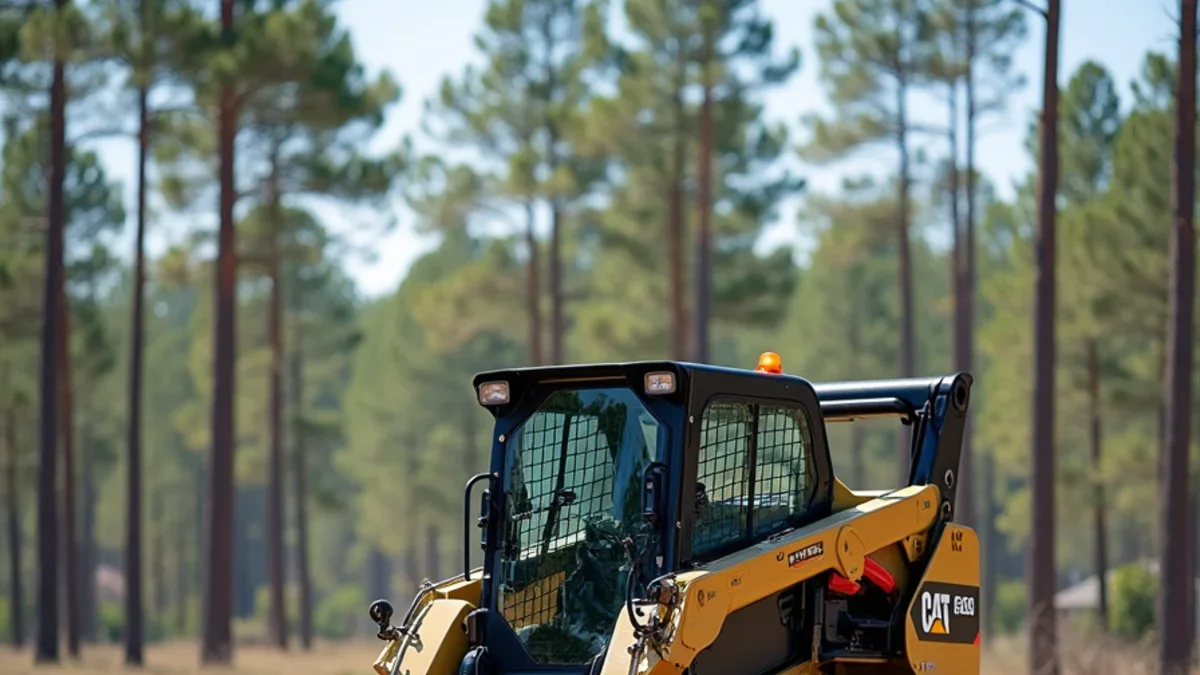
Land grading is the precision engineering process of stripping topsoil, reshaping terrain, and mechanically compacting subgrade soils to establish uniform load bearing and laser-calibrated drainage slopes. Proper site preparation prevents cracked driveways, foundation washouts, and standing water, saving thousands of dollars over the lifecycle of your concrete installation.
What Is Land Grading: The Foundation of Every Concrete Pour
In the exterior construction industry, there is an ironclad rule: a concrete pour is only as good as the ground underneath it. Many homeowners in North Augusta, Aiken, and the Central Savannah River Area believe that concrete installation begins when the transit mixer truck arrives and pours ready-mix down the chute. In structural reality, 80% of the long-term durability of your driveway, patio, or building slab is determined before a single drop of cement is mixed.
Land grading is the precision earthmoving and engineering process of stripping unstable organic topsoil, reshaping lot contours to manage water runoff, and mechanically consolidating subgrade soils to achieve an unyielding foundation. When grading is skipped or performed carelessly with a garden rake, slabs crack, settle unevenly, and channel stormwater directly into crawlspaces.
Investing in dedicated Land Grading and certified Concrete Driveway Installation guarantees that your flatwork is built upon a laser-calibrated, high-compaction foundation.

The 4 Critical Phases of Professional Concrete Site Preparation
At FPC Construction, every site preparation project follows an uncompromising four-phase engineering workflow:
Phase 1: Utility Locates and Organic Stripping Before excavating, we contact SC811 to locate all underground electrical, water, gas, and communication utilities. Using compact track loaders equipped with toothed grading buckets, we strip the top 4 to 6 inches of turf, grass, pine roots, and soft topsoil. Organic matter rots over time; leaving even 1 inch of turf beneath a slab guarantees hollow voids within three years.
Phase 2: Cut, Fill and Rough Grading We survey lot elevations using dual-slope rotary lasers. In high areas, we 'cut' excess native soil; in low areas, we 'fill' with structural fill dirt or crushed stone. We contour perimeter swales and transition ramps to match municipal curb heights and garage floor thresholds.
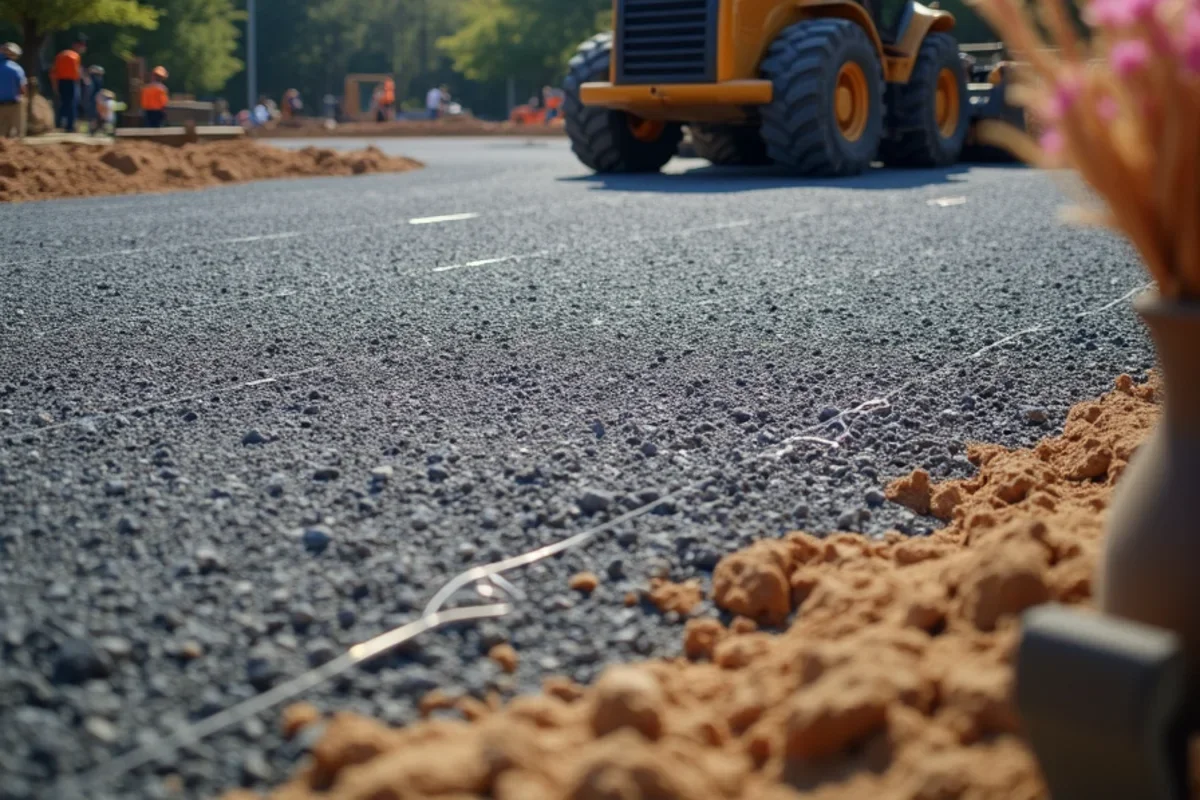
Phase 3: Aggregated Subbase Installation We install South Carolina Department of Transportation (SCDOT) approved CR-14 crusher-run stone aggregate (a balanced mixture of 1.5-inch fractured granite stone down to stone dust). The angular stone dust locks between the crushed rocks, creating a dense, interlocking road-base cushion that bridges natural soil moisture variations.
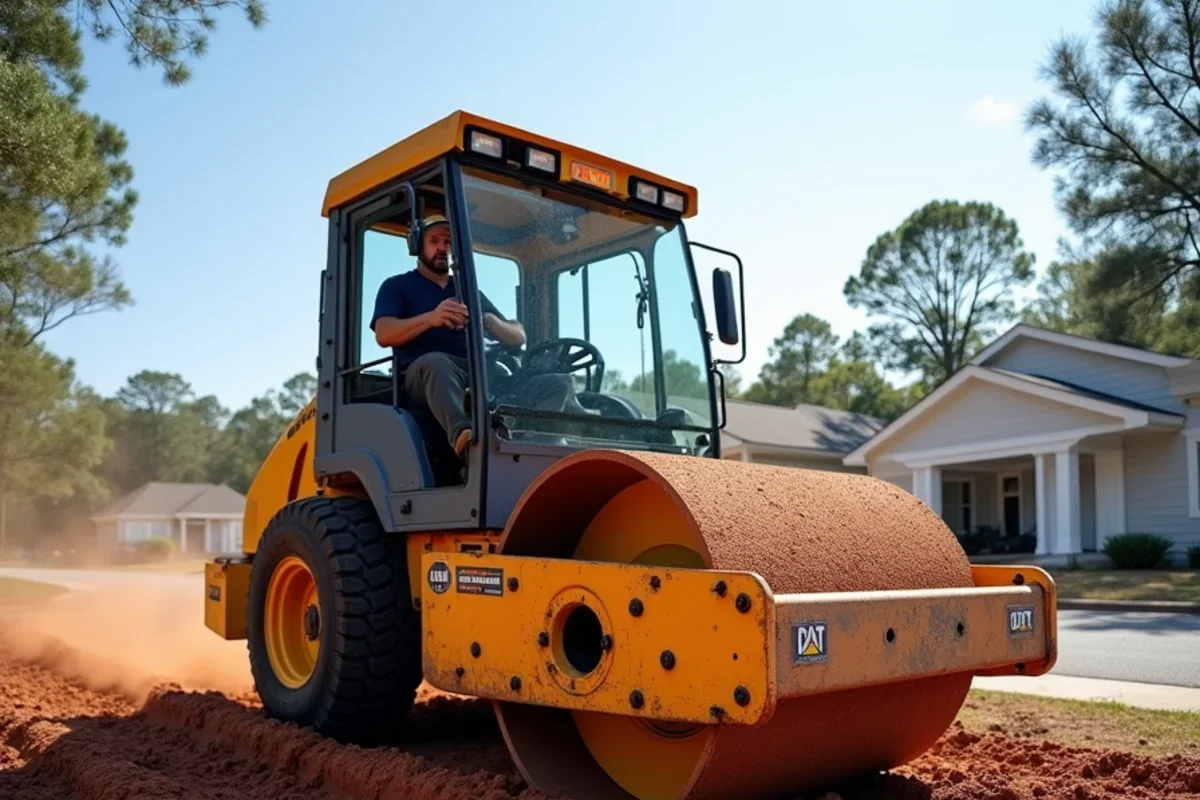
Phase 4: Mechanical Lift Compaction We compact the aggregate bed in 2-inch lifts using heavy reversible plate compactors delivering 6,000 to 10,000 pounds of centrifugal force. Each lift is compacted to 95% Standard Proctor density, ensuring zero settlement when 4,000 PSI ready-mix is placed.
Laser-Calibrated Slope: The 1/4-Inch Per Foot Drainage Mandate
Water is the ultimate enemy of exterior concrete. If a driveway or patio is graded completely flat, natural surface tension causes puddles to linger after rainstorms. In South Carolina, standing water breeds mosquitoes, stains concrete with black algae, and seeps into joints during winter freeze-thaw cycles.
Our grading technicians utilize Spectra Precision GL422N dual-slope grade lasers mounted on heavy tripods to calibrate exact drainage gradients:
- Standard Minimum Slope: 1/8 to 1/4 inch per foot (1.0% to 2.0% grade) directed away from homes and foundation walls.
- Driveway Cross Slopes: 1.5% crown or cross-fall directed toward roadside stormwater swales.
- Garage Apron Transitions: We form a 1/2-inch drop across the garage door threshold to ensure wind-driven storm rain cannot blow under weather seals into the garage interior.
Compaction Science: Standard Proctor Density and Plate Tampers
Why do cheap contractor driveways crack within twelve months? They skip mechanical compaction. Loose, excavated dirt naturally contains up to 40% empty pore space (air voids). When vehicles drive over concrete placed on uncompacted dirt, vehicle weight compresses the air voids out of the soil, causing the ground to settle 1 to 2 inches. The unreinforced concrete slab attempts to bridge this gap, undergoes extreme tensile stress, and snaps.
We achieve 95% Standard Proctor density (ASTM D698) across every square foot of subbase:
- Reversible Diesel Plate Compactors: Our Wacker Neuson plate compactors vibrate at high frequencies, forcing angular stone particles into maximum packing density.
- Moisture Conditioning: If crushed stone is too dry, particles cannot slide together; if too wet, water blocks compaction. We condition aggregate moisture to optimal Proctor levels before tamping.
- Proof-Rolling Verification: Before placing forms, we drive loaded equipment over the graded bed. If tires produce any visible rutting or deflection, we excavate deeper and re-compact.
Our Commercial Fleet: Skid Steers, Excavators & Lasers
Executing surgical site preparation requires dedicated heavy machinery tailored for residential and commercial access:
- Bobcat T770 Compact Track Loaders: Equipped with rubber tracks that exert low ground pressure, preventing lawn tearing while grading up to 100 tons of stone per day.
- Mini-Excavators with Hydraulic Thumbs: Ideal for extracting stubborn tree roots, digging thickened monolithic footings, and trenching drainage swales.
- Dual-Slope Optical Laser Transmitters & Machine Receivers: Mounted directly on loader grading boxes to establish automatic, millimeter-accurate subgrade cuts.
Land Grading Costs and Timeline Specification Table
| Project Type | Typical Scope | Estimated Duration | Typical Price Range | Key Equipment Deployed |
|---|---|---|---|---|
| Patio / Small Pad Grading | Strip 200–400 sq ft, 4" stone base | 3 to 6 Hours | $400 – $900 | Mini-skid steer, plate tamper, laser |
| Two-Car Driveway Site Prep | Demo gravel, strip 600 sq ft, 4" stone | 4 to 8 Hours | $800 – $1,800 | Track loader, dump truck, compactor |
| Acreage / Long Driveway Cut | Cut 150+ linear feet, roadside ditching | 1 to 2 Days | $2,000 – $4,500 | Full-size track loader, mini-excavator |
| Monolithic Building Pad Prep | Strip, grade beam trenching, 6" stone | 1 to 2 Days | $1,500 – $3,500 | Laser-guided loader, trenching bucket |
Next Steps: Start Your Concrete Project on Solid Ground
Never risk your concrete investment on uneven, uncompacted dirt. Contact FPC Construction at (833) 334-0468 for a free on-site property evaluation, laser slope survey, and detailed written grading estimate within 24 hours.
Environmental Stormwater Best Management Practices (BMPs)
During land grading operations in South Carolina, contractors must prevent sediment runoff from entering local storm sewers and waterways under EPA and SC DHEC regulations. FPC Construction installs temporary silt fences, sediment filter tubes, and stabilized construction entrance pads. Our grading cuts establish permanent grass swales and rip-rap stone check dams that capture stormwater velocity and prevent soil erosion across your property.
Speak Directly with a South Carolina Concrete Specialist
Guaranteed 1-hour callback · On-site evaluation in 48 hours · Free written estimate
Article Frequently Asked Questions
Key takeaways and common homeowner inquiries answered by our concrete team.